
(chū) - to exit, to come out, to produce in Mandarin
chūTraditional: 出
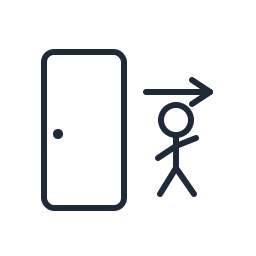

Translation
to exit, to come out, to produce
Word origin
出 is an early character traditionally read as a pictograph showing a foot or plant moving up and out of an enclosure or a cave mouth, depicting the act of going out. Later forms standardised the shape, but the core sense of emerging or exiting is preserved.
- Origin
- pictograph
- Root
- depicts movement out of an opening or enclosure
Stroke order

出
Examples
。
Something happened to him.
!
Come out!
?
Where is the problem?
六。
He goes out at six every morning.
。
He published a novel.
出 (chū) means to exit, to come out, to produce. It is used as a verb in everyday Mandarin speech.
Where this fits
Appears in 8 words
Multi-character compounds in the corpus that contain 出.
Used in
Stories
(6)Grammar articles
(18)Approximation and Rounding in Mandarin: 左右, 大概, 差不多, 几 and 来 for About, Around and Roughly
The Mandarin 把 (bǎ) Construction: Fronting the Object to Say What You Did To It
The Mandarin 被 (bèi) Passive: Saying Something Was Done To the Subject
Mandarin Causatives 使 (shǐ), 令 (lìng) and 让 (ràng): Making Someone Feel or Do Something
Mandarin Complements: 得 for Manner, Directional Endings, and How to Attach a Result to a Verb
Compound Directional Complements in Mandarin: Verb + 起来, 下去, 过来, 出来 and Motion Relative to the Speaker
Mandarin Verb Conjugation: Why It Doesn't Exist and What Replaces It
Mandarin Conjunctions: 虽然…但是, 因为…所以, 如果…就 and the Paired Structures That Join Clauses
Figurative Directional Complements in Mandarin: 起来, 下去 and 出来 Beyond Up, Down and Out
Mandarin Existential and Presentative Sentences: 有, 出现, 发生 and Why New Things Go After the Verb
Mandarin Intermediate Grammar (B1-B2 / HSK 4-5): Complements, Conjunctions and the Full 了 System
Mandarin Potential Complements: Can You Reach the Result? (吃得完, 听不懂, 买不起)
Mandarin Rhetorical Questions: 难道, 不是...吗, 何必 and 岂不
Serial Verb Constructions in Mandarin: 我去商店买东西 and Stacking Verbs in Sequence
无论 and 不管 in Mandarin: The No Matter What Frame (无论/不管 ... 都/也)
Mandarin 性 (xìng) and 化 (huà): Building Abstract Nouns and '-ise' Verbs
The Mandarin 以 (yǐ) Family: 以为, 以及, 以便, 以免, 以来 and 以...为...
The Mandarin 于 (yú) Family: 对于, 关于, 由于, 至于, 属于, 位于, 终于
Add to review queue
Track this word in your spaced-repetition queue and be tested on it at the right interval.
Go to my review queueMandarin · Free printables
出: worksheet, infographic and listicle
Free printable study downloads for the Mandarin word "出" (to exit, to come out, to produce): a worksheet with the answer key built in, an infographic, and a sentence listicle. Open any one to view, print or save.
Free for members
The printable worksheets, infographics and PDFs are free with an account. Start a free week and download as many as you like.
Start your free weekThis word is part of lesson 6.