
Ch 2 · Lesson 11Portuguese · Chapter 2 · Lesson 11 · Grammar primer
Saying when: na segunda, em maio, no verão
does the work of on and in: , , , . Plus the four seasons and , , .
The short version
, , but
.
Why?Hide
Portuguese uses for both on and in. Before a day it fuses with the article: the -feira days are feminine, so , and and are masculine, so . Months take plain , with no article: .
Saying when: na segunda, em maio, no dia cinco
English says on for days and in for months. Portuguese uses for both, and it fuses with the article in front of a day:
| When | Portuguese | English |
|---|---|---|
| a weekday | | on Monday |
| the weekend | | on Saturday |
| every week | segundas | on Mondays |
| every week | | on Saturdays |
| a month | | in May |
| a date | | on the fifth of May |
The -feira days are feminine, so they take ; and are masculine and take . A habit takes the plural with :
segundas.- I work on Mondays..- I don't work on Sundays.
BR speech also says segundas or for the habit: . - I work every Monday.
Months take plain , with no article: , not .
Asking and giving the date
?- What's the date today?.- Today is the tenth..- My birthday is on the twentieth of July.
The date uses the plain number, with one exception: the first of the month is , as in . EP often says instead. Written down, the day comes first, as in Britain: 20/7 is the twentieth of July.
The four seasons
| Portuguese | English | In it |
|---|---|---|
| spring | |
| summer | |
| autumn | |
| winter | |
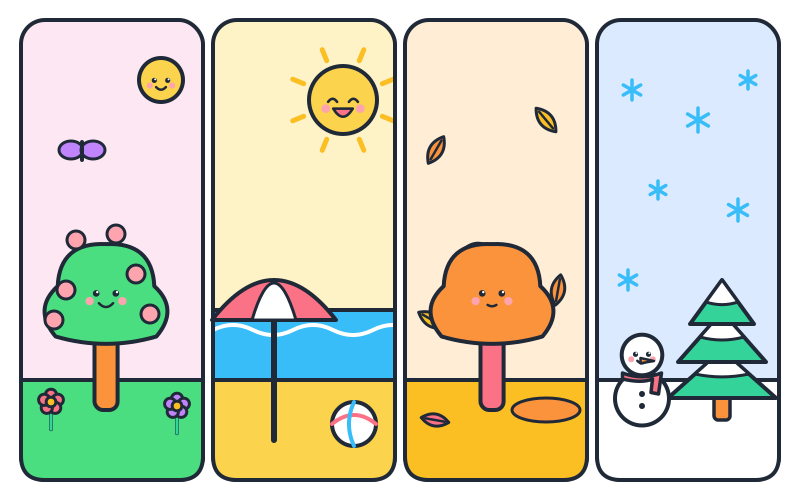
In each season: na before the feminine primavera, no before the three masculine ones.
, .- In Brazil, Christmas is in summer.
That sentence is not a typo: Brazil is in the southern hemisphere, so its summer runs from December to March.
Weather goes with , not . works for how it is right now. ( ., winter is cold, is fine: there describes the season.)
| Portuguese | English |
|---|---|
. | It's hot. |
. | It's cold. |
. | It's sunny. |
. | It's cold now. |
. | It rains a lot. |
.- In winter it's cold.
Hoje, amanhã, ontem: anchoring a day in time
| Portuguese | English |
|---|---|
| the day before yesterday |
| yesterday |
| today |
| tomorrow |
| the day after tomorrow |
.- Yesterday was Sunday..- Today is Monday..- Tomorrow is Tuesday.!- See you tomorrow!
Going further: The weekdays: numbered, not named and the rest of the guide, when you want them. This lesson does not need them.
Practice
Practise this lesson
10-question session
One question at a time, mixed across the exercises in this lesson. Miss one and it comes back round before the end.
New words in this lesson
 primeiropɾiˈmejɾufirst
 a primavera(feminine)pɾimaˈvɛɾɐspring (the season)
 o verão(masculine)veˈɾɐ̃w̃summer
 o outono(masculine)owˈtonuautumn
 o inverno(masculine)ĩˈveʁnuwinter
 a chuva(feminine)ˈʃuvɐrain
 o guarda-chuva(masculine)ɡwaʁdɐˈʃuvɐumbrella
 o calor(masculine)kaˈloʁheat
 frioˈfɾiucold
 o sol(masculine)sɔwsun
 ontemˈõtẽj̃yesterday
Portuguese · Free printables
Worksheets for this lesson
Worksheets with answer keys built in. Open any one to view, print or save.
Lesson 11 of 34 in this chapter