
Ch 31 · Lesson 17Spanish · Chapter 31 · Lesson 17 · Grammar primer
Prepositional pronouns: para mí, conmigo
The pronouns after a preposition - , , - the accent on , and con fusing into and .
The short version
Con refuses to sit next to
¿ ?
Why?Hide
After a preposition only the first two pronouns break rank: with a written accent, with none at all, because tí does not exist. Then con refuses to stand beside them and fuses into one word: , , . Only con does this. Every other preposition keeps its distance: , , .
Prepositional pronouns at a glance
Only the top two rows change. From down, the pronoun after a preposition is the subject pronoun:
| Person | After a prep. | English |
|---|---|---|
| me | | for me |
| you | | without you |
| him | | about him |
| her | | for her |
| you () | | for you |
| us | | without us |
| you all | | with you |
| them | | for them |
| you all () | | for you |
, , also have the feminine forms , , : (without us, all women).
Mí with an accent, ti without
carries an accent to keep it apart from (my). has no twin, so it never carries one:
| Word | Means | Example |
|---|---|---|
| me | . It's for me. |
| my | . It's my house. |
| you | . It's for you. |
They follow almost every preposition (the few exceptions are below):
.- I'm not going without you..- He/She is behind me.¿ ?- What do you think of me?
They also give stress with a: , ¿ ? (I like coffee, how about you?) The pronoun on the verb stays; see object pronouns.
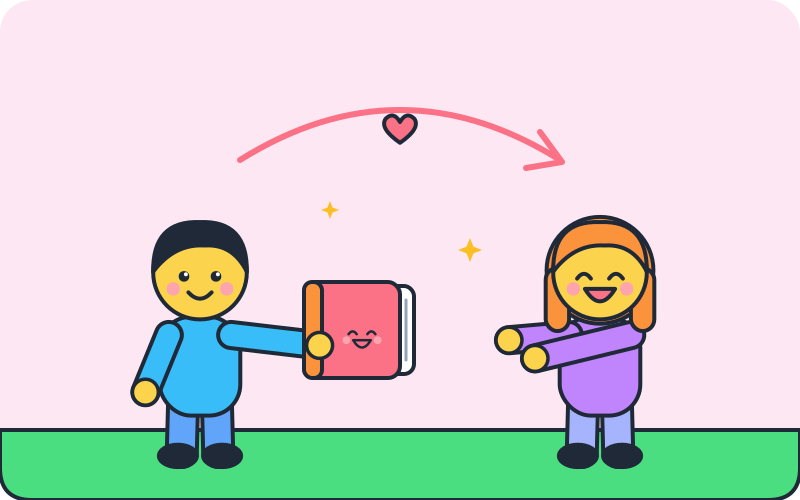
Yo (I), el libro (the book), para ti (for you): after para, ti, not tú.
Conmigo, contigo: con fuses
Con refuses to stand next to and . It fuses with them into one word:
| Pieces | One word | English |
|---|---|---|
| con + | | with me |
| con + | | with you |
¿ ?- Are you coming with me?.- I want to talk to you.
Only con fuses, with these two and the reflexive sí (below). Everything else stays apart: , , , .
Going further: Entre tú y yo: yo and tú after a few words and the rest of the guide, when you want them. This lesson does not need them.
Practice
Practise this lesson
10-question session
One question at a time, mixed across the exercises in this lesson. Miss one and it comes back round before the end.
Spanish · Free printables
Worksheets for this lesson
Worksheets with answer keys built in. Open any one to view, print or save.
Free for members
The printable worksheets, infographics and PDFs are free with an account. Start a free week and download as many as you like.
Start your free weekLesson 17 of 28 in this chapter