
Ch 44 · Lesson 8Spanish · Chapter 44 · Lesson 8 · Grammar primer
Collocations: tomar, hacer, dar, sacar
Which verb goes with which noun: (not ), , , . Learn the verb WITH its noun, not from the English verb.
The short version
You take a decision in Spanish, never make one
Why?Hide
English piles make, do, take and have onto everything. Spanish splits the same work across , , , and , and the split does not line up. , , , . Learn the verb welded to its noun and the trap never opens.
¿ ?
Why?Hide
(make a decision), (ask a question), (go for a walk), (take a photo). The noun decides the verb, and the English verb is no guide at all. Learn each noun with its verb.
Spanish fixes which verb goes with which noun, and the pairs rarely match English. Translate the English verb and the sentence comes out grammatical and foreign:
.- I have to make a decision.¿ ?- Can I ask a question?
Collocations at a glance
The pairs that catch English speakers most. The highlighted verb is the one Spanish uses.
| English | Spanish |
|---|---|
| make a decision | |
| ask a question | |
| go for a walk | |
| take a photo | |
| make a mistake | |
| take a risk | |
| pay attention | |
| keep a promise | |
| have a nap | |
| be successful | |
There is no rule behind these. The noun decides the verb, so store them as pairs.
Make, take, do: tomar, hacer, dar, sacar
English spreads make, take, do and have over everything. Spanish splits the same nouns between four verbs, and the split does not follow the English:
| Verb | Goes with | Example |
|---|---|---|
| a decision, a drink, the sun | . | |
| a question, a queue, notice | ¿ ? | |
| a walk, thanks, a fright | . | |
| a photo, a mark, a conclusion | . |
Some more of each:
| Spanish | English |
|---|---|
| to sunbathe |
| to take note |
| to queue (Spain) |
| to pack (a suitcase) |
| to take notice |
| to say thank you |
| to frighten |
| to draw conclusions |
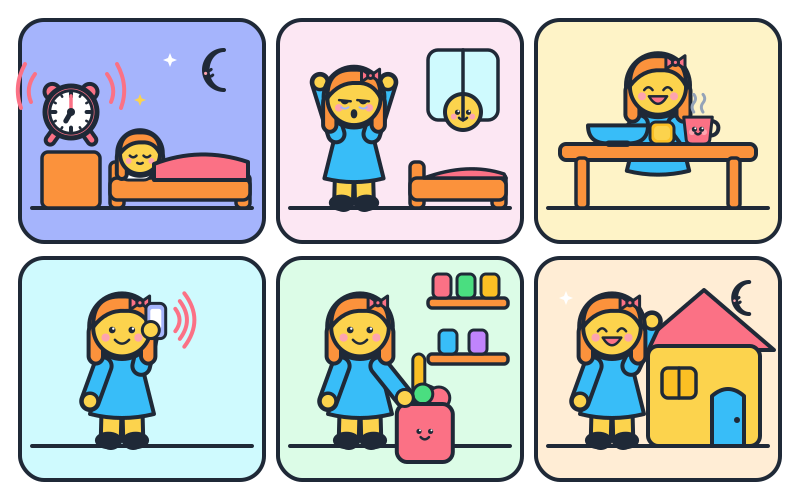
- .
- .
- .
Toma el desayuno: she has breakfast. Hace una llamada: she makes a phone call. Hace la compra: she does the shopping (Spain; much of Latin America says hacer las compras).
A photo changes with the country. works everywhere; Spain also says , and Latin America :
¿ ?- Will you take a photo of me?
Going further: Cometer, correr, prestar: verbs English does not expect and the rest of the guide, when you want them. This lesson does not need them.
Practice
Practise this lesson
10-question session
One question at a time, mixed across the exercises in this lesson. Miss one and it comes back round before the end.
Spanish · Free printables
Worksheets for this lesson
Worksheets with answer keys built in. Open any one to view, print or save.
Free for members
The printable worksheets, infographics and PDFs are free with an account. Start a free week and download as many as you like.
Start your free weekLesson 8 of 25 in this chapter