
Ch 2 · Lesson 29English · Chapter 2 · Lesson 29 · Grammar primer
Plurals: friends, buses, babies
Add -s: one friend, two friends. Then -es after s, x, ch and sh (buses, boxes), and -ies after a consonant + y (babies).
The short version
Add -s, or -es after s, x, ch and sh
.
Why?Hide
For most words the plural just adds -s: book, books. Words that end in s, x, ch or sh add -es, and this makes a new beat: bus, buses. After a consonant, y becomes -ies (baby, babies); after a vowel, just add -s (boy, boys).
One thing is singular: a cat. Two or more things are plural: two cats. For most words you just add -s. A few patterns change that, and a short list of words do their own thing. The colour shows the plural part.
| Rule | One | More than one |
|---|---|---|
| : -s | | |
| s, x, ch, sh: -es | | |
| consonant + y: -ies | | |
| -f / -fe: -ves | | |
| irregular | | |
|
One and more than one: add -s
This is the big rule. Most words just add -s.
| One | More than one |
|---|---|
| |
| |
| |
|
.(more than one sister)Ben .(three, so -s)
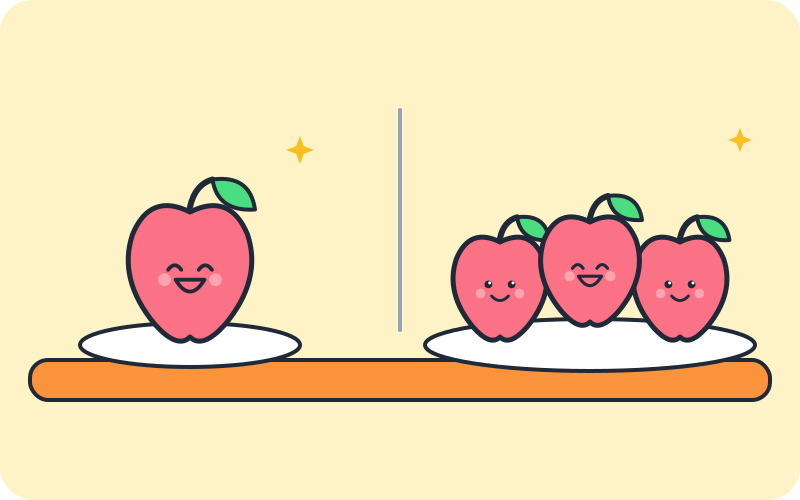
One apple. More than one: add -s.
Use the plural after any number more than one, and after many and some:
A word for one thing usually needs a or an: a book. A plural does not: books (not a books).
Add -es after s, x, ch and sh
These words end in a hissing sound. Only -s is hard to say, so we add -es. It makes a new beat: bus, bus-es.
| Ends in | One | More than one |
|---|---|---|
| s | | |
| ss | | |
| x | | |
| ch | | |
| sh | |
.(bus-es: two beats)
Some words in -o add -es too: ,
. But many add only -s: ,
. There is no rule here: learn them one by one.
Consonant + y becomes -ies
Look at the letter before the y. A consonant (b, d, t and so on)? Take away the y and add -ies.
| One | More than one |
|---|---|
| |
| |
| |
|
A vowel (a, e, i, o, u) before the y? Just add -s.
| One | More than one |
|---|---|
| |
| |
| |
|
.(o before y: just -s).(t before y: -ies)
Two boies is a common spelling mistake with plurals.
Going further: Some words in -f or -fe change to -ves and the rest of the guide, when you want them. This lesson does not need them.
Practice
Practise this lesson
9-question session
One question at a time, mixed across the exercises in this lesson. Miss one and it comes back round before the end.


English · Free printables
Worksheets for this lesson
Worksheets with answer keys built in. Open any one to view, print or save.
Lesson 29 of 37 in this chapter