
Ch 2 · Lesson 18English · Chapter 2 · Lesson 18 · Grammar primer
Days, months and seasons
Monday to Sunday, January to December, spring to winter: the words, the weekend, and why Wednesday has only two beats.
The short version
Wednesday has two beats: WENZ-day
.
Why?Hide
Monday to Friday are weekdays; Saturday and Sunday are the weekend. Say Wednesday with two beats, WENZ-day: the first d is written but not said. And the third season is autumn in British English; Americans say fall.
English has seven days, twelve months and four seasons. The words are easy. The small words before them (on, in, at) and the capital letters need a little care: on Monday, in May, in summer.
| Time | Small word | Example |
|---|---|---|
| ||
3 | ||
| ||
| ||
2026 | ||
| (UK) | |
The seven days of the week
| Day | Short | Note |
|---|---|---|
| Mon | workday |
| Tue | |
| Wed | "WENZ-" |
| Thu | |
| Fri | workday |
| ||
|
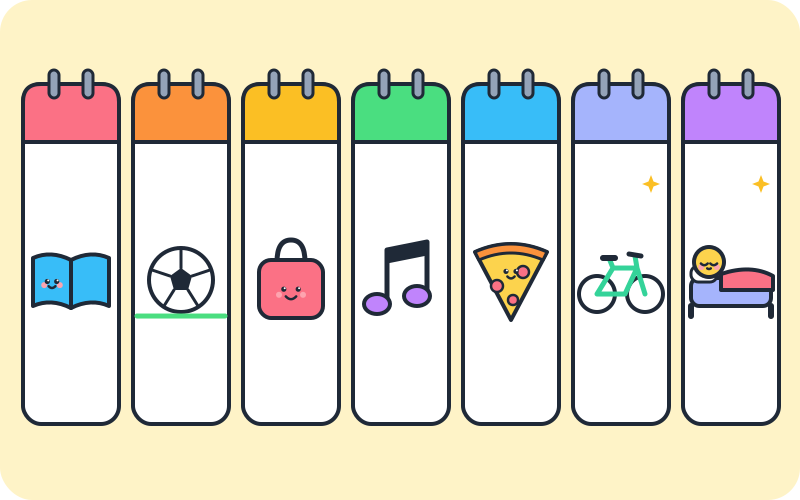
A week, Monday to Sunday. Every day starts with a capital letter.
Saturday and Sunday are the weekend. Monday to Friday are weekdays.
Say with two parts, not three: "WENZ-day". The
first d is silent.
- Today is Tuesday. (the day now)
- The shop is closed on Sunday. (you cannot go in on Sunday)
The twelve months
| Month | Short | Month | Short |
|---|---|---|---|
| Jan | Jul | ||
| Feb | Aug | ||
| Mar | Sep | ||
| Apr | Oct | ||
| Nov | |||
| Jun | Dec |
Read down the first two columns, then the next two. May has no short form. It is already short.
- My birthday is in April. (the month of my birthday)
- December is a cold month in the UK. (winter there)
The four seasons
| Season | Months in the UK | Example |
|---|---|---|
| , , | It's warm in spring. | |
| , , | We go to the sea. | |
| , , | The leaves fall. | |
| , , | It's cold and dark. |
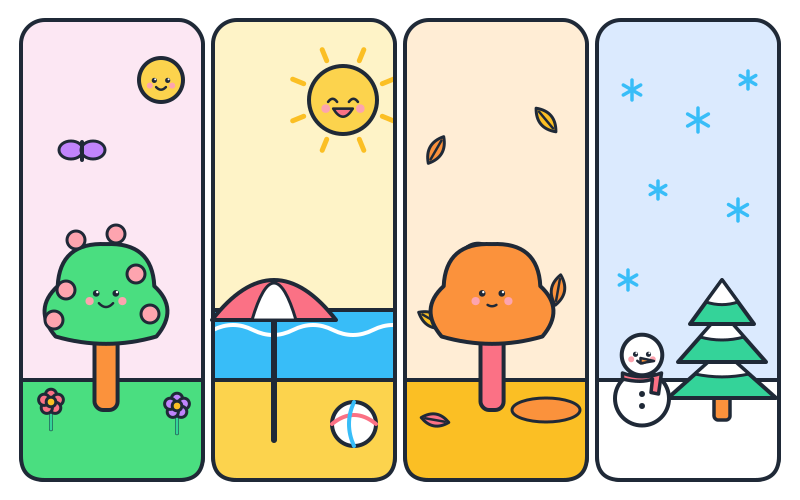
Spring, summer, autumn, winter. No capital letters for the seasons.
Autumn is the British word. In American English, people say fall. Both are correct: in autumn (UK), in the fall (US).
In the south of the world, the seasons come at other times: In Australia, Christmas is in summer. (December is hot there).
Going further: Capital letters: Monday and May, but summer and the rest of the guide, when you want them. This lesson does not need them.
Practice
Practise this lesson
9-question session
One question at a time, mixed across the exercises in this lesson. Miss one and it comes back round before the end.
New words in this lesson
 monday/ˈmʌn.deɪ/The first day of the working week, after Sunday and before Tuesday.
 tuesday/ˈtjuːz.deɪ/The second day of the working week, after Monday and before Wednesday.
 wednesday/ˈwɛnz.deɪ/The third day of the working week, after Tuesday and before Thursday.
 thursday/ˈθɜːz.deɪ/The fourth day of the working week, after Wednesday and before Friday.
 friday/ˈfraɪ.deɪ/The fifth day of the working week, after Thursday and before the weekend.
 saturday/ˈsæt.ə.deɪ/The sixth day of the week, after Friday and before Sunday.
 sunday/ˈsʌn.deɪ/The seventh day of the week, after Saturday and before Monday.
 week/wiːk/A period of seven days, usually counted from Monday to Sunday.
 weekend/ˌwiːkˈend/Saturday and Sunday, the two days when most people do not work.
 today/təˈdeɪ/On this day, the day that is happening now.
 month/mʌnθ/One of the twelve parts of a year, like May.
 January/ˈdʒæn.ju.ər.i/The first month of the year, between December and February. It always takes a capital letter.
 February/ˈfeb.ru.ər.i/The second month of the year, between January and March. It always takes a capital letter.
 April/ˈeɪ.prəl/The fourth month of the year, between March and May. It always takes a capital letter.
 June/dʒuːn/The sixth month of the year, between May and July. It always takes a capital letter.
 July/dʒʊˈlaɪ/The seventh month of the year, between June and August. It always takes a capital letter.
 August/ˈɔː.ɡəst/The eighth month of the year, between July and September. It always takes a capital letter.
 September/sepˈtem.bə/The ninth month of the year, between August and October. It always takes a capital letter.
 October/ɒkˈtəʊ.bə/The tenth month of the year, between September and November. It always takes a capital letter.
 November/nəʊˈvem.bər/The eleventh month of the year, between October and December. It always takes a capital letter.
 December/dɪˈsem.bər/The twelfth and last month of the year, between November and January. It always takes a capital letter.
 birthday/ˈbɜːθ.deɪ/The day each year when you remember the day a person was born.
 season/ˈsiːzn/One of the four parts of the year: spring, summer, autumn, or winter.
 spring/sprɪŋ/The season after winter, when plants start to grow.
 summer/ˈsʌmə/The warmest season of the year, between spring and autumn.
 autumn/ˈɔː.təm/The season between summer and winter, when the leaves fall from the trees and the days get colder.
 winter/ˈwɪntə/The coldest season of the year, when the days are short and it often snows.
English · Free printables
Worksheets for this lesson
Worksheets with answer keys built in. Open any one to view, print or save.
Lesson 18 of 37 in this chapter