
Ch 2 · Lesson 22English · Chapter 2 · Lesson 22 · Grammar primer
Was, were and did: past questions and negatives
I was, they were. Did you go? I didn't go: did carries the past, so the verb goes back to plain. And the time words: yesterday, last night, ago.
The short version
After did, the verb goes back to plain
?
Why?Hide
For every verb except be, questions and negatives in the past use did, and did already carries the tense. So the main verb returns to its base form. Putting the past on both words is a double past, which English does not allow, and it is one of the most common past simple errors.
Was and were: the past of "be"
Be is the one verb with two past forms. Am and is become was; are becomes were.
| Who | Past of be | Example |
|---|---|---|
| / / / | | . |
| / / | | . |
Be makes its own questions and negatives, with no did:
?(a question: was goes first).(we were not)?, .
Questions and negatives: the auxiliary "did"
For every verb except be, questions and negatives use (the past of do). Did carries the past, so the main verb goes back to its base form. The past goes on once only.
| Statement | Question | |
|---|---|---|
. | ? | |
| irregular | . | ? |
.(not I didn't went).(he had no idea)
One exception: when who or what is the subject, there is no did. Who called you? (the caller is the answer) What happened? (asking about the event).
Time expressions that signal the past simple
These words pin the action to a finished time, so they take the past simple.
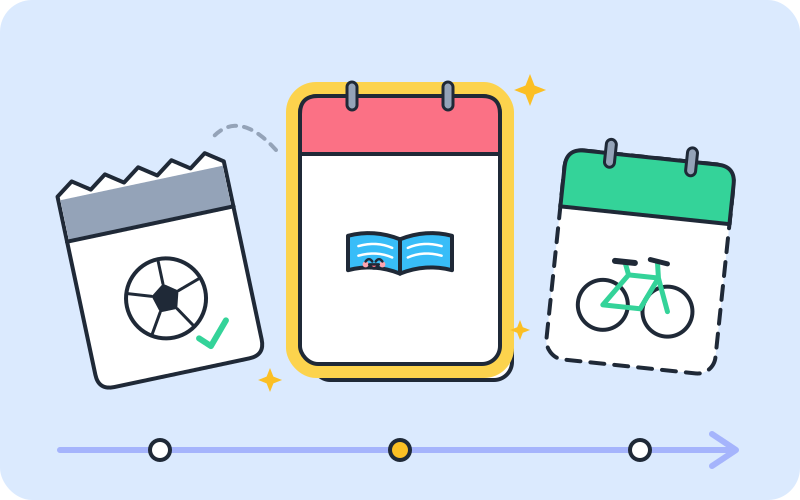
- : .
Yesterday is finished and torn off, so it takes the past simple.
| Time words | Example |
|---|---|
| I saw him yesterday. | |
| , | We met last week. |
| He called two days ago. | |
| 2010 | She left school in 2010. |
| When I was ten, I had a dog. |
Ago goes after the time: ten years ago, never ago ten years. For the years themselves, see years in English.
Going further: How to form the past simple and the rest of the guide, when you want them. This lesson does not need them.
Practice
Practise this lesson
7-question session
One question at a time, mixed across the exercises in this lesson. Miss one and it comes back round before the end.
English · Free printables
Worksheets for this lesson
Worksheets with answer keys built in. Open any one to view, print or save.
Lesson 22 of 37 in this chapter