
Ch 11 · Lesson 5Esperanto · Chapter 11 · Lesson 5 · Grammar primer
More proverbs: pli ... ol, participles and sia
, : comparison, a participle, mal- and , each carried by a you will remember.
The short version
, .
Why?Hide
After (more), than is always : , better than. compares equals, in ... (as ... as). Zamenhof's about bread and freedom carries the rule in one line, and , the most, is the whole superlative: there is no -est to learn.
Comparison: pli ... ol and plej
| # | Proverb | Literally |
|---|---|---|
| 8 | , . | Better bread without butter than sweet cake without freedom. |
| 9 | . | Repetition is the best learning. |
| 10 | . | After ugly weather shines the sun most bright. |
(more) wants (than), never . (most) is the whole superlative: there is no -est to learn, as comparisons shows.
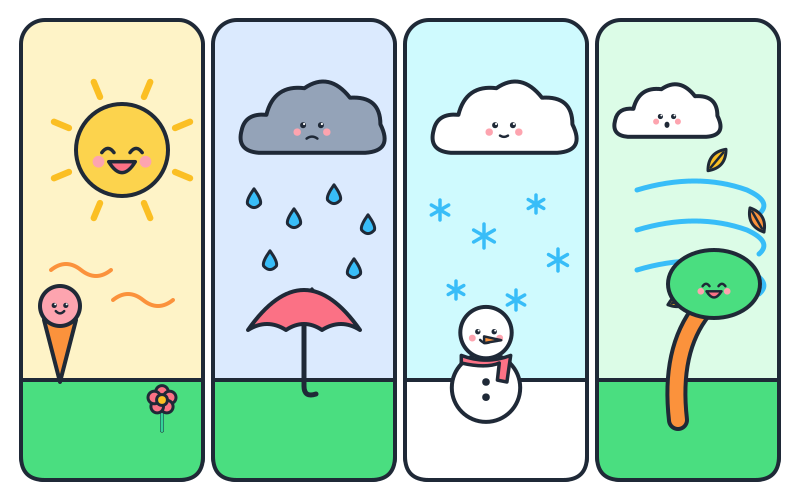
Post vetero malbela lumas suno plej hela: after ugly weather (2, the rain) the sun shines brightest (1).
Line 10 also shows free order: the verb comes before its subject , and both adjectives follow their nouns, here for the rhyme.
Participles, affixes and compounds
| # | Proverb | Literally |
|---|---|---|
| 11 | . | Not everything shining is a diamond. |
| 12 | . | Even a small fly is not without a mouth. |
Look back at lines 3 and 9 too. The pieces:
| Word | Pieces | What it adds |
|---|---|---|
| -- | shining, right now |
| - + | the opposite: small |
| -- | repeating as a habit |
| | lightning-thunder |
says everything that shines in two words: that is what participles are for. In the last root is the thing and the first describes it, as in Esperanto compounds generally.
sia, and lines with no verb
| # | Proverb | Literally |
|---|---|---|
| 13 | . | Everyone has their own taste. |
| 14 | , . | First came, first took. |
| 15 | . | A friend in joy and in tears. |
- Line 13:
is the reflexive possessive, the subject's own. It takes-nto agree with. - Line 14 uses the adjective
(first) as the subject, with no noun: first come, first served. - Line 15 has no verb at all: proverbs often leave the verb out.
Mistakes learners make
| Wrong | Right | Why |
|---|---|---|
| | no -n after |
| | |
... | ... | after |
| | |
Going further: Where the proverbs come from and the rest of the guide, when you want them. This lesson does not need them.
Practice
Practise this lesson
7-question session
One question at a time, mixed across the exercises in this lesson. Miss one and it comes back round before the end.
Esperanto · Free printables
Worksheets for this lesson
Worksheets with answer keys built in. Open any one to view, print or save.
Free for members
The printable worksheets, infographics and PDFs are free with an account. Start a free week and download as many as you like.
Start your free weekLesson 5 of 9 in this chapter