
Ch 3 · Lesson 19Esperanto · Chapter 3 · Lesson 19 · Grammar primer
Comparisons: pli, plej, ol, kiel
means better than, means best, means as good as. Four little words replace English's -er, -est, more, most and their exceptions.
The short version
.
Why?Hide
Comparatives are plus the adjective, superlatives , and nothing changes shape: , , . Than is , and in a comparison it follows or ; the group after takes . Equality uses with , or with for amounts. The pairings are fixed, so is wrong: announces sameness in a sentence about difference.
Put in front for more and for most; than is . The adjective never changes shape, and there are no irregular forms.
| Esperanto | English |
|---|---|
| big |
| bigger than me |
| less big |
| the biggest |
| as big as me |
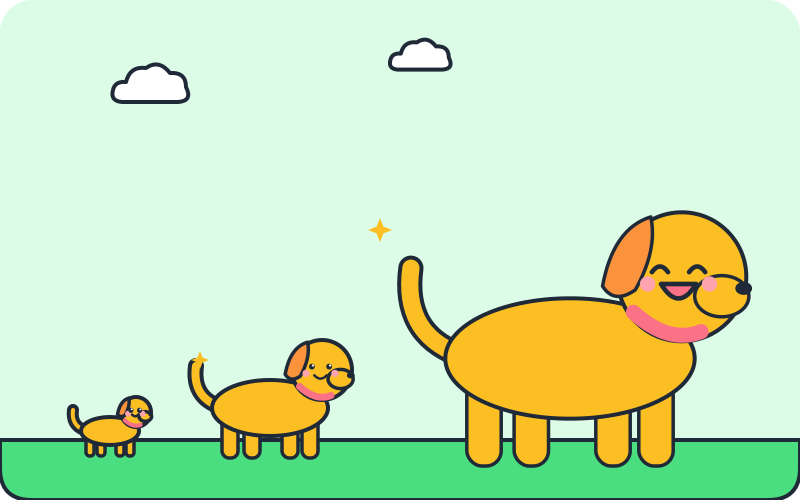
Malgranda hundo, a small dog; pli granda hundo, a bigger dog; la plej granda hundo, the biggest dog.
pli and plej
The adjective stays as it is. makes the comparative, the superlative:
| Plain | More | Most |
|---|---|---|
| | |
| | |
| | |
English has bigger against more beautiful and good, better, best. Esperanto has , , , and that is the whole system.
Adverbs work the same way, usually without :
.- He runs faster..- She runs fastest.
ol: than
brings in the thing you compare with. In a comparison it comes after or :
.- He is taller than me..- Nothing is more important than the truth.
The superlative names its group with or , never :
.- She is the youngest of the children.
has a few fixed partners outside comparison too: (other than), (before). It never means as.
tiel ... kiel: as ... as
For equality, the pair is ... ; for amounts, ... (with before a noun):
.- She is as strong as her father..- I work as fast as he does..- I have as many books as you.
, not : the father is the subject of a shortened clause of his own (as her father is), so cannot point back to .
The pairs never cross:
| Comparison | First word | Then |
|---|---|---|
| more, less | | |
| as ... as | | |
| as much as | | |
Going further: Less: malpli, and what mal- does here and the rest of the guide, when you want them. This lesson does not need them.
Practice
Practise this lesson
8-question session
One question at a time, mixed across the exercises in this lesson. Miss one and it comes back round before the end.
Esperanto · Free printables
Worksheets for this lesson
Worksheets with answer keys built in. Open any one to view, print or save.
Free for members
The printable worksheets, infographics and PDFs are free with an account. Start a free week and download as many as you like.
Start your free weekLesson 19 of 34 in this chapter