
Ch 4 · Lesson 12Esperanto · Chapter 4 · Lesson 12 · Grammar primer
Three ways to make a person: -ul-, -ist-, -an-
What they are like, what they do, what they belong to: , , o. Choosing between the three is a question with an answer, not a matter of style.
The short version
-ul-, -ist- and -an- answer three different questions
, o
Why?Hide
All three build a person out of a root and they are not interchangeable. -ul- asks what someone is like: , o, . -ist- asks what they do for a living or as a settled practice: , , . -an- asks what they belong to: o, komitatano, o. Test yourself on the sea. A is a sailor by trade; a ŝipano is whoever happens to be on that ship's crew.
Three ways to make a person
Three suffixes turn a root into a human being, and they are not interchangeable. Each answers its own question:
| Question | Suffix | Example |
|---|---|---|
| Like what? | -- | |
| Doing what? | -- | |
| Belonging to what? | -- | |
-ul-: what they are like
-- takes a quality and gives you someone who has it. It mostly sits on adjectives:
| Root | Person | English |
|---|---|---|
| , young | | a young person |
| , old | | an old person |
| , foreign | | a stranger |
| , rich | | a rich person |
| , wise | | a wise person |
.- The old person is sitting by the door.
It is not limited to adjectives: , a companion, is (with) plus --, a with-person.
-ist-: what they do
-- marks a job, a profession, or a practice kept up long enough to define someone:
| Root | Person | English |
|---|---|---|
| , to teach | | teacher |
| , to treat | | doctor |
| , sea | | sailor |
| , to cook | | cook |
|
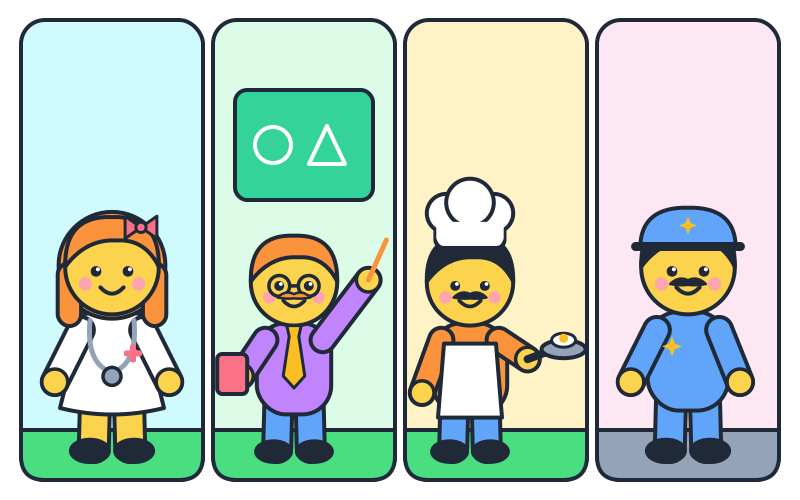
Kuracistino, a doctor (a woman); instruisto, a teacher; kuiristo, a cook.
-- is not the participle --. is whoever is teaching at this moment; is a teacher by trade:
.- My father is a teacher.
-an-: what they belong to
-- means a member, an inhabitant, a participant. It sits on places, groups and causes:
| Root | Person | English |
|---|---|---|
| , town | | townsperson |
| , village | | villager |
| , family | | family member |
| , congress | | congress-goer |
.- She is a villager.
Alone it is , a member. And , the word Esperantists use for each other, is sam- (same) + - (idea) + --: a member of the same idea.
Going further: The volume knob: -et- and -eg- and the rest of the guide, when you want them. This lesson does not need them.
Practice
Practise this lesson
10-question session
One question at a time, mixed across the exercises in this lesson. Miss one and it comes back round before the end.





Esperanto · Free printables
Worksheets for this lesson
Worksheets with answer keys built in. Open any one to view, print or save.
Free for members
The printable worksheets, infographics and PDFs are free with an account. Start a free week and download as many as you like.
Start your free weekLesson 12 of 31 in this chapter