
Ch 2 · Lesson 25Italian · Chapter 2 · Lesson 25 · Grammar primer
Mi piace: saying what you like
In Italian the thing you like is the subject: for one thing or an action, for more than one.
The short version
Italian never says I like, it says it pleases me
.
Why?Hide
There is in . The music is the subject and means to me. That is why the verb agrees with what you like, not with you: for one thing, for several. Say the thing first in your head, then add the pronoun.
Italian has no verb that means I like. It has , to be pleasing, and the thing you like does the pleasing: is literally the music pleases me. The verb agrees with the thing, so for one and for several.
The thing you like is the subject
| Who likes it | One thing | Several things |
|---|---|---|
| I | | |
| you (friend) | | |
| he | | |
| she | | |
| we | | |
| you (plural) | | |
| they | | |
Read across the rows. The pronoun changes with who is liking; the verb changes only with what is liked.
English makes you the subject. Italian makes the thing the subject and puts you in the to-slot:
That explains three things at once:
- There is no
: you are not the subject..I like music. - The person never changes the verb:
.We like music. - The thing can come first too:
.Coffee, I like.
Piace or piacciono
for one thing or an action, for more than one thing:
| What you like | Example | English |
|---|---|---|
| one thing | . | I like pizza. |
| an infinitive | . | I like singing. |
| two or more things | . | I like films. |
| two nouns with e | . | I like pizza and . |
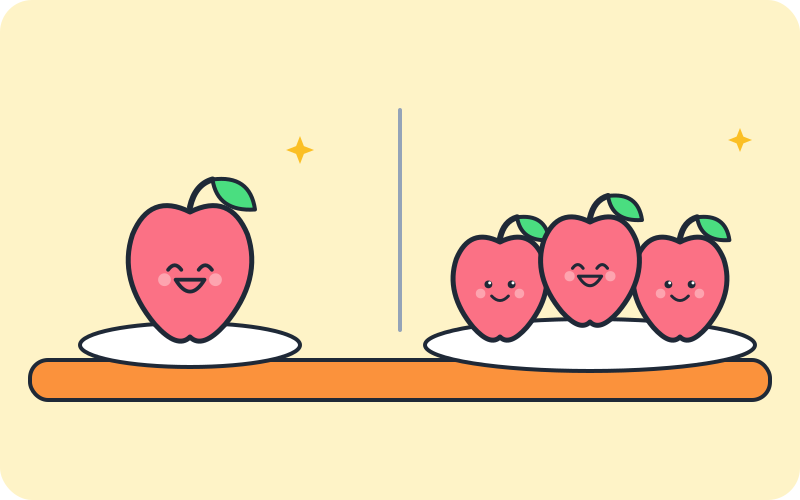
One apple: piace. Several apples: piacciono. The verb counts the apples, not the person who likes them.
An action counts as a single thing, so two verbs stay singular: . I like singing and dancing. Two nouns joined by , by contrast, add up to a plural.
Keep the article, too. English says I like music; Italian says , with . is wrong.
To say how much, put the adverb after the verb:
.- I like it a lot..- I don't like it much.
Going further: Mi, ti, gli, le: who does the liking and the rest of the guide, when you want them. This lesson does not need them.
Practice
Practise this lesson
10-question session
One question at a time, mixed across the exercises in this lesson. Miss one and it comes back round before the end.
Italian · Free printables
Worksheets for this lesson
Worksheets with answer keys built in. Open any one to view, print or save.
Lesson 25 of 39 in this chapter