
Ch 2 · Lesson 34Italian · Chapter 2 · Lesson 34 · Grammar primer
Aspetta! Guarda! Telling a friend what to do
The command of an -are verb ends in -a, and -ere and -ire verbs keep their -i. is let's go, with no extra word.
The informal imperative: tu, noi, voi
Three persons, and two of them cost nothing, because the and commands are the present tense:
| Person | | | |
|---|---|---|---|
| | | |
| | | |
| | | |
The only new form is with -are verbs. The present says , you speak; the command says , speak!
-ere and -ire verbs keep the -i of the present, so and are both statement and command:
!- Wait!!- Look!!- Come here!!- Listen!!- Come to dinner! (to several people)
- !
- !
- !
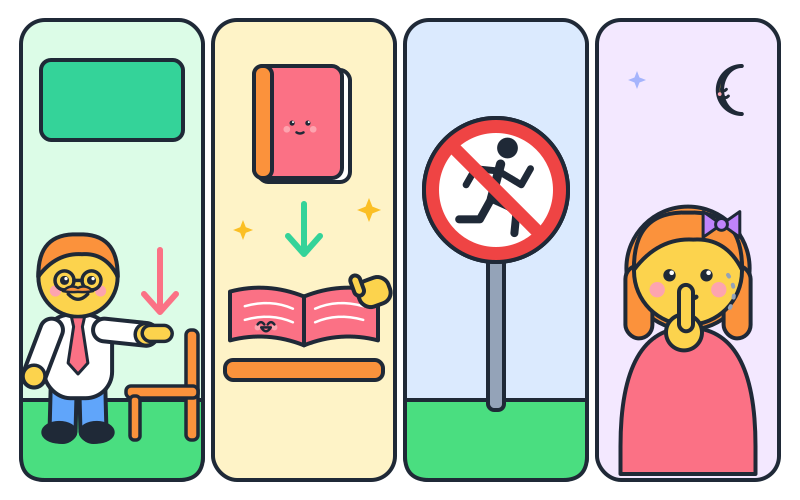
Classroom commands to one pupil: siediti (sit down) and apri (open) keep the -i of the present; a negative tu command is non plus the infinitive.
The form is Italian's let's, with no extra word. is both we go and let's go, and the voice does the rest: ! Let's go!
Going further: The whole system on one screen and the rest of the guide, when you want them. This lesson does not need them.
Practice
Practise this lesson
8-question session
One question at a time, mixed across the exercises in this lesson. Miss one and it comes back round before the end.
Italian · Free printables
Worksheets for this lesson
Worksheets with answer keys built in. Open any one to view, print or save.
Lesson 34 of 39 in this chapter