
(lí kāi) - to leave, to depart from in Mandarin
líkāiTraditional: 離開
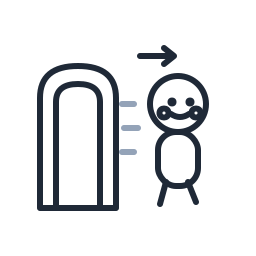

Translation
to leave, to depart from
Word origin
离开 means to leave or depart. 离 (lí) is to part from (traditional 離, 隹 'bird' radical with phonetic 离). 开 (kāi) is to open (from 開, hands unbarring a gate), here giving a sense of moving away.
- Origin
- compound
- Root
- 离 (lí, to part) + 开 (kāi, to open/away)
Stroke order

离

开
Examples
。
He has left.
。
Please don't leave me.
。
I am leaving this city tomorrow.
。
He left home last night.
座。
Please do not leave your seat.
离开 (lí kāi) means to leave, to depart from. It is used as a verb in everyday Mandarin speech.
Where this fits
Used in
Add to review queue
Track this word in your spaced-repetition queue and be tested on it at the right interval.
Go to my review queueMandarin · Free printables
离开: worksheet, infographic and listicle
Free printable study downloads for the Mandarin word "离开" (to leave, to depart from): a worksheet with the answer key built in, an infographic, and a sentence listicle. Open any one to view, print or save.
Free for members
The printable worksheets, infographics and PDFs are free with an account. Start a free week and download as many as you like.
Start your free weekThis word is part of lesson 4.