
Ch 12 · Lesson 7Spanish · Chapter 12 · Lesson 7 · Grammar primer
Ven, haz, di: the eight irregular tú commands
, , ten, , , , , : short, common and learned by heart.
The short version
Eight
.
Why?Hide
, , ten, , , , and : be, go, have, come, do, say, put and leave. They are short, common and break the drop-the-s rule, so learn them as one chant. has an accent to tell it apart from the pronoun .
The eight irregular tú commands
Eight common verbs have short commands that have to be learned by heart:
| Verb | Command | English |
|---|---|---|
| be | |
| go | |
| have | |
| come | |
| do, make | |
| say, tell | |
| put | |
| leave |
.- Come here..- Be careful..- Be good..- Get out of here.
carries an accent to tell it apart from the pronoun . (go) is spelt like (he sees); context sorts it out. Most verbs built on these copy them: , keep, from .
- .
- .
- .
- .
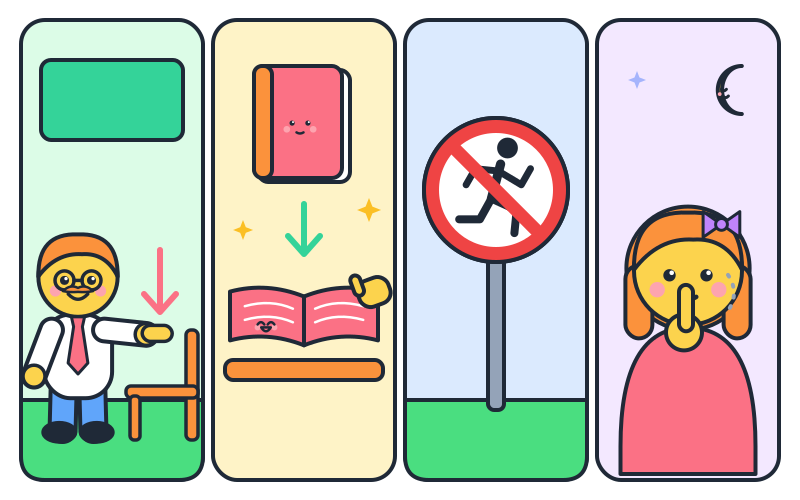
Classroom commands to one person: sit down, open the book, don't run, be quiet. Only the negative borrows the subjunctive.
Going further: Every Spanish command on one chart and the rest of the guide, when you want them. This lesson does not need them.
Practice
Practise this lesson
9-question session
One question at a time, mixed across the exercises in this lesson. Miss one and it comes back round before the end.
Spanish · Free printables
Worksheets for this lesson
Worksheets with answer keys built in. Open any one to view, print or save.
Free for members
The printable worksheets, infographics and PDFs are free with an account. Start a free week and download as many as you like.
Start your free weekLesson 7 of 31 in this chapter