
Ch 1 · Lesson 10French · Chapter 1 · Lesson 10 · Grammar primer
French articles: le, la, les and un, une, des
The and a, in both genders and the plural - and why and shrink to l' before a vowel: , .
The short version
Talking about dogs in general takes
.
Why?Hide
General statements about a whole class keep the definite article in French, even though English strips it out. is I like dogs, not some particular dogs. The same goes for abstract nouns, languages and countries: , , France.
,
Why?Hide
Before a vowel or a silent h, and lose their vowel: , , . It is compulsory, so is wrong every time. The catch is that l' hides the gender, so learn it with the word: is feminine, masculine. and never elide.
The three systems at a glance
The whole system on one screen. Read across a row for one meaning, down a column for one gender.
| Type | Masculine | Feminine | Plural |
|---|---|---|---|
| Definite | | | |
| Indefinite | | | |
| Partitive | | | |
Before a vowel sound, and become l', and and become l' (see elision, below).
Each row answers a different question:
| Row | Means | Example |
|---|---|---|
| Definite | the one we know | - the book |
| Indefinite | one of a kind | - a table |
| Partitive | some, uncounted | - some bread |
Which column you are in depends on the noun's gender, which is why French noun gender comes with every new word: learn and , never bare .
The definite article: le, la, les
Use it for a specific thing the listener can identify, and for a whole category (more on that below).
.- The book is on the table.
The plural serves both genders: (the books), (the tables).
The indefinite article: un, une, des
Use it for one of a kind, not a particular one.
.- I have (some) books.
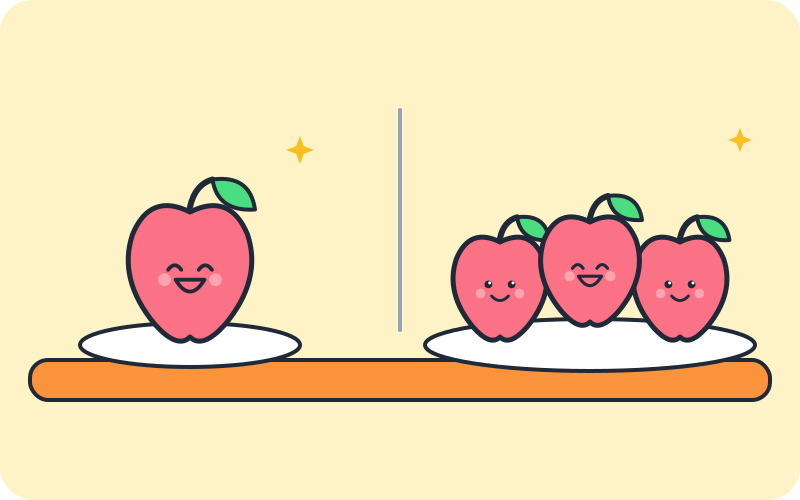
One apple is une pomme; more than one is des pommes, (some) apples. English drops the some; French never drops des.
English often drops some in the plural; French keeps . I have books is , never .
Elision: le and la become l' before a vowel sound
Before a vowel or a silent h, and lose their vowel. So do and , which become l'.
| Without elision | With elision | English |
|---|---|---|
| the water | |
| the man | |
| the tree | |
| (some) money |
Elision is compulsory: is wrong every time. The indefinite never elides: (a friend), (a female friend). Because l' hides the gender, note it when you learn the word: is feminine, masculine.
Going further: The partitive article: du, de la, des and the rest of the guide, when you want them. This lesson does not need them.
Practice
Practise this lesson
9-question session
One question at a time, mixed across the exercises in this lesson. Miss one and it comes back round before the end.
New words in this lesson
- d'accord/da.kɔʁ/okay, alright
- d'abord/da.bɔʁ/first of all, firstly, to start with
- quelqu'un/kɛl.kœ̃/somebody, someone
 le livre(masculine)/livʁ/book; pound (currency)
 la table(feminine)/tabl/table
 l'enfant(masculine)/ɑ̃.fɑ̃/child
 l'eau(feminine)/o/water
 l'homme(masculine)/ɔm/man, human being
 l'arbre(masculine)/aʁbʁ/tree
 l'argent(masculine)/aʁʒɑ̃/money, silver
 le cinéma(masculine)/si.ne.ma/cinema
 parler/paʁle/to speak, to talk
 la maison(feminine)/mɛzɔ̃/house, home
 la chambre(feminine)/ʃɑ̃bʁ/room, bedroom
 la plage(feminine)/plaʒ/beach
 rentrer/ʁɑ̃.tʁe/to go back, to return home
 l'école(feminine)/e.kɔl/school
 aimer/eme/to love, to like
 le chien(masculine)/ʃjɛ̃/dog
 manger/mɑ̃.ʒe/to eat
 le pain(masculine)/pɛ̃/bread
French · Free printables
Worksheets for this lesson
Worksheets with answer keys built in. Open any one to view, print or save.
Lesson 10 of 14 in this chapter