
/ˈunos/
Translation
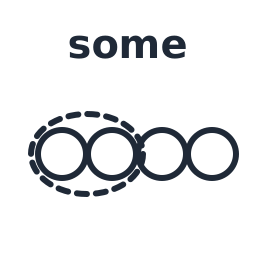
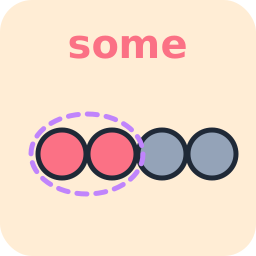
some, a few (masculine plural)
Word origin
The masculine plural of un, from Latin unos, from unus ('one'). As a plural indefinite it means 'some, a few'.
- Origin
- Latin
- Root
- unus
- English cognates
- one, unit, union
Examples
estantería.
There are some very interesting books on that bookshelf.
.
I have a few friends who have lived in Buenos Aires for years.
.
The meeting is going to last about twenty minutes at most.
.
I bought some new shoes for the trip to the mountains.
.
I need a few days off before starting the new project.
is the masculine plural indefinite article in Spanish, the plural of un. It translates roughly as "some" or "a few", marking an unspecified quantity of countable masculine nouns: unos libros (some books), unos amigos (a few friends). English often drops the article in plural ("I bought books"), so learners forget that Spanish keeps it for the same vague-quantity meaning.
Unos also has a quantitative reading meaning "approximately", much like English "about": unos veinte minutos (about twenty minutes), unos diez años (around ten years). The feminine plural counterpart is unas. Before a singular masculine noun starting with stressed a or ha, Spanish uses un (the singular form), but in the plural unos stays the same regardless of the noun's initial sound. See the Spanish articles guide for the full set.
Where this fits
Used in
Stories
(1)Grammar articles
(11)Spanish Adjective Agreement: Endings, Position, and the Shortened Pre-Nominal Set
Spanish Advanced Grammar (C1-C2): The Constructions That Sound Native
Spanish Articles: Definite vs Indefinite, Gender, Number, and When English Doesn't Use One
Spanish Text Cohesion and Style: signposting, avoiding repetition, en resumen
The Future and Conditional of Probability in Spanish (¿Qué hora será?, Serían las tres)
Spanish Noun Gender: The -o/-a Rule, the Ending Patterns, and the Exceptions Worth Memorising
Spanish Noun Plurals: Add -s, Add -es, Swap -z for -ces, and the Nouns That Never Change
Spanish Possessive Pronouns: el mío, el tuyo, el suyo and the Long Possessives
Spanish Quantifiers: mucho, poco, demasiado, todo, cada (mucha gente vs trabaja mucho)
Spanish Reciprocal Verbs (se quieren, nos ayudamos - each other)
Spanish Superlatives: El Mejor, El Más, and the -ísimo Ending
Add to review queue
Track this word in your spaced-repetition queue and be tested on it at the right interval.
Go to my review queueSpanish · Free printables
unos: worksheet, infographic and listicle
Free printable study downloads for the Spanish word "unos" (some, a few (masculine plural)): a worksheet with the answer key built in, an infographic, and a sentence listicle. Open any one to view, print or save.
Free for members
The printable worksheets, infographics and PDFs are free with an account. Start a free week and download as many as you like.
Start your free weekThis word is part of lesson 5.