
Ch 1 · Lesson 7Esperanto · Chapter 1 · Lesson 7 · Grammar primer
Say something today: greetings and courtesies
A dozen fixed everyday phrases - hello, thank you, I am a beginner - so you can greet a real Esperantist before you have learned any grammar.
The short version
Greetings take the -n ending
, .
Why?Hide
Esperanto greetings are the object of a verb nobody says: (I wish you) a good day. Objects take the accusative -n, so it is , and . You do not need the rule to use the phrases, but a bare sounds odd to an s ear.
keeps a conversation alive
, .
Why?Hide
Learn the phrases whole, each question with its answer: ? Bone, . asks the other person to slow down or try again, and buys you patience from anyone. The set phrase is , never .
You can hold a first conversation before you know any grammar. Greetings and courtesies are fixed phrases in every language: learn the ones below as whole things to say, and you can walk into a club, a video call or a congress this afternoon.
| Esperanto | English |
|---|---|
! | Hello! |
? | How are you? |
. | Thank you. |
. | I do not understand. |
! | Bye! |
New to the language itself? Is Esperanto easy to learn? covers what Esperanto is, and basic Esperanto phrases goes beyond greetings into a first trip.
Greetings
| Esperanto | English | When |
|---|---|---|
! | Hello, hi | any time, anyone: learn this first |
! | Good morning | the morning |
! | Good day | the daytime |
! | Good evening | the evening |
! | Good night | going to bed |
! | Goodbye | literally: until the seeing-again |
! | Bye | the short form most people say |
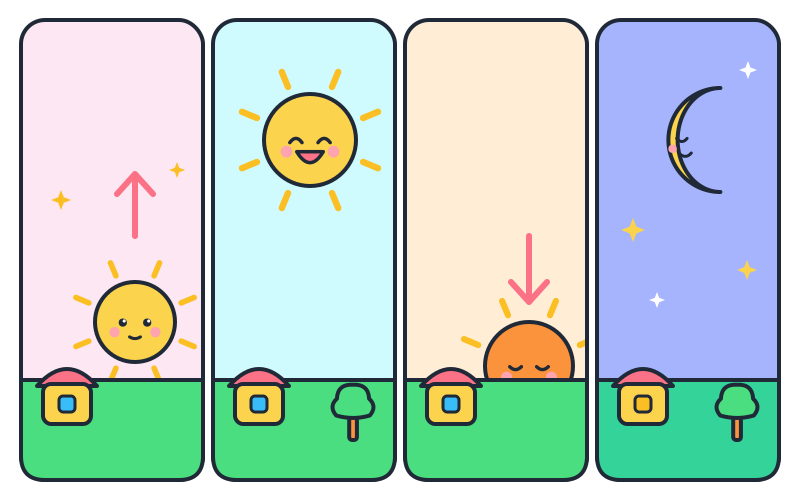
- !
- !
- !
- !
One greeting for each part of the day: only the middle word changes.
In a real exchange:
! ?- Hello! How are you?, .- Good day, sir.!- See you tomorrow!
means until, so is until tomorrow and is until we see each other again.
Getting by
| Esperanto | English |
|---|---|
? | How are you? |
, . | Fine, thank you. |
? | And you? |
? | What is your name? |
... | My name is... |
. | I do not understand. |
. | I am a beginner. |
Learn them in pairs, question with answer, so they arrive together:
? - Berta.- What is your name? - My name is Berta.
is the most useful sentence a beginner owns: it asks the other person to slow down or try again instead of leaving them guessing. buys you patience from anyone you say it to.
Courtesies
| Esperanto | English | Note |
|---|---|---|
. | Thank you. | one word, said as it looks |
. | Thank you very much. | warmer |
e. | You are welcome. | literally: not worth thanks |
... | Please (be so good as) | before a |
. | Please (I ask). | on its own, or after a request |
. | Sorry. / Excuse me. | an apology, or to get past |
. / . | Yes. / No. |
The two ways of saying please sit in different places:
.- Please come. (+ a verb in-i), .- That one, please. (
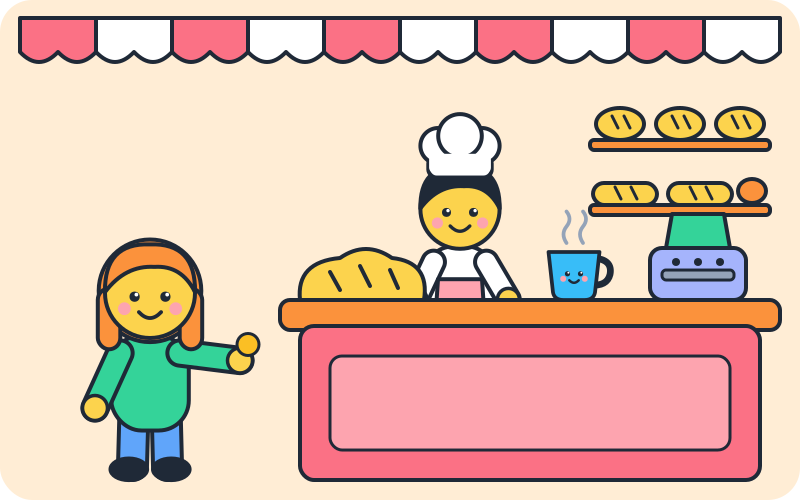
- , . !
- .
The customer asks with mi petas and thanks with dankon; the baker answers ne dankinde.
(literally forgive) covers a bump in a corridor and a real apology alike:
, .- Sorry, I do not understand.
Going further: Why saluton and dankon end in -n and the rest of the guide, when you want them. This lesson does not need them.
Practice
Practise this lesson
10-question session
One question at a time, mixed across the exercises in this lesson. Miss one and it comes back round before the end. There are 29 in all: practise more afterwards if you want them.
Esperanto · Free printables
Worksheets for this lesson
Worksheets with answer keys built in. Open any one to view, print or save.
Lesson 7 of 51 in this chapter