
Ch 1 · Lesson 24Esperanto · Chapter 1 · Lesson 24 · Grammar primer
Pronouns, part two: min, lin, nin
The eight pronouns you just met, at work: for people in general, and -n when the pronoun is the one seen or heard. and come next.
The short version
The object adds -n, but not after
, .
Why?Hide
When a pronoun is the one being seen, heard or helped, it takes -n, exactly as a noun does: , , , , . After a preposition it normally stays plain, even where English says me or him: , , . The preposition already shows the role, so is wrong.
The whole system on one screen
Read across: the object adds -n, the possessive adds -a.
| English | Subject | Object | Possessive |
|---|---|---|---|
| I | | | |
| you | | | |
| he | | | |
| she | | | |
| it | | | ĝia |
| we | | | |
| they | | | |
English I, me, my and she, her, her have to be learned one by one. Here the table is a pattern, not a list.
Subject pronouns
The verb never changes, so the pronoun does all the work of saying who:
.- I am a person..- You speak well..- They came with us.
Three points the table cannot show, each with an example:
| Pronoun | What to know | Example |
|---|---|---|
| one person or several; no formal form | . All of you came. |
| things and animals, not adults | . It is big. |
| any group: men, women, things | . They are there. |
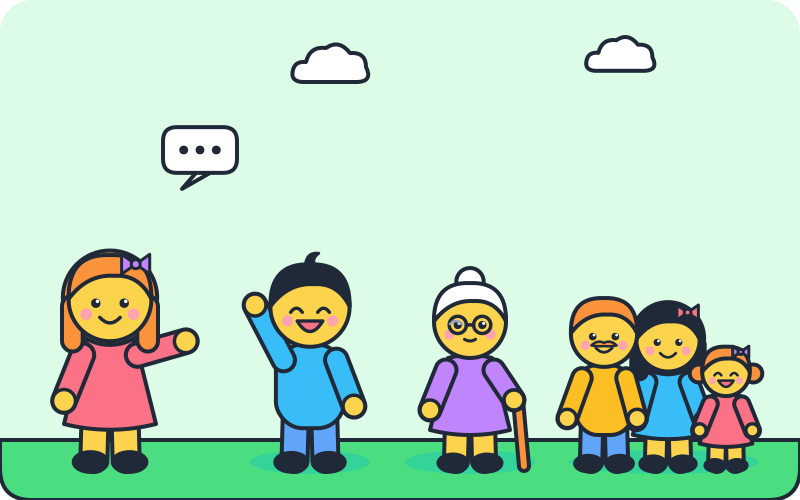
The woman speaking says vi to her friend, to the older stranger and to the whole group: one you, with no polite or plural form to choose.
Esperanto does not normally drop a personal subject, as Spanish and Italian do:
.- She is good.
on its own does not say who is good. (Two rarer pronouns exist: , an old intimate thou almost nobody uses, and ri, a newer gender-neutral he or she that some speakers use and others reject.)
The object: add -n
When the pronoun is the one being seen, heard or looked at, it takes the accusative -n, exactly as a noun does:
| Esperanto | English |
|---|---|
. | He sees me. |
. | I see him. |
. | She is looking at us. |
. | We see them. |
Because the ending marks the object, the words can move without changing who does what:
.- He sees me. (stress on me)
In everyday speech the plain order is the usual one: subject, verb, object.
Oni: people in general
is the vague subject English spreads across one, you, they and people:
, .- People say she will come..- You cannot know.
It is almost always the subject, and it never says who exactly. The full story, including how it replaces many English passives, is in impersonal sentences.
Going further: Possessives: add -a and the rest of the guide, when you want them. This lesson does not need them.
Practice
Practise this lesson
10-question session
One question at a time, mixed across the exercises in this lesson. Miss one and it comes back round before the end.
Esperanto · Free printables
Worksheets for this lesson
Worksheets with answer keys built in. Open any one to view, print or save.
Lesson 24 of 51 in this chapter