
Ch 2 · Lesson 17Spanish · Chapter 2 · Lesson 17 · Grammar primer
Un perro blanco, una casa blanca: gender spreads
A noun's gender picks the article, the adjective ending and the pronoun: one decision, four places it shows.
The short version
One gender, four words that agree
. .
Why?Hide
A noun's gender does not stay in the noun. It picks the article, the adjective ending and the pronoun that replaces it: , ; , . That is why a slip is so : in , two words out of three are wrong.
Why gender matters: the agreement cascade
Gender does not stay inside the noun. It decides the article, every adjective and the pronoun that replaces the noun.
| What agrees | Masculine | Feminine |
|---|---|---|
| the | | |
| a | | |
| adjective | | |
| pronoun | (the dog) | (the house) |
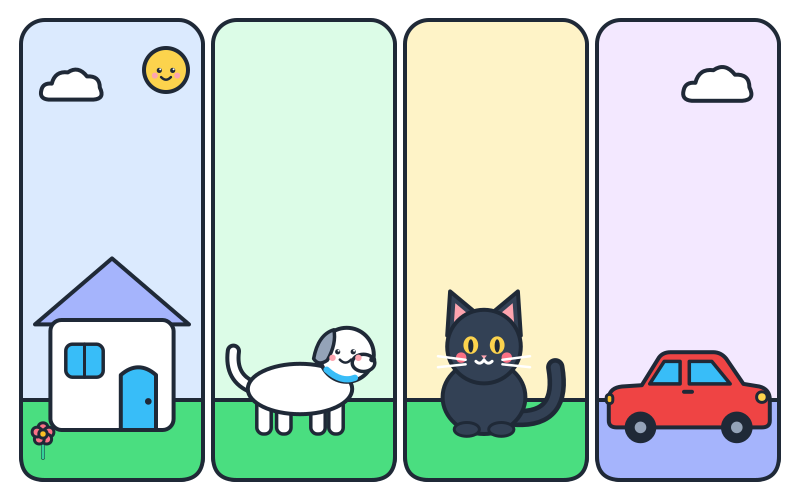
The house and the dog are the same white, but casa is feminine and perro masculine, so the colour ends in -a for one and -o for the other.
One decision, four places it shows up, all in one sentence:
. .- The dog is white. I can see it.. .- The house is white. I can see it.
That is why a gender slip is so : in , two of three words are wrong. The adjective agreement page has the full set of adjective endings.
Going further: What gender actually is and the rest of the guide, when you want them. This lesson does not need them.
Practice
Practise this lesson
9-question session
One question at a time, mixed across the exercises in this lesson. Miss one and it comes back round before the end.
Spanish · Free printables
Worksheets for this lesson
Worksheets with answer keys built in. Open any one to view, print or save.
Lesson 17 of 50 in this chapter