
Ch 1 · Lesson 9Portuguese · Chapter 1 · Lesson 9 · Grammar primer
Ser and estar: sou and estou
Portuguese splits to be in two. says what you are; says where you are and how you are right now. The present of both, and which one each job takes.
The short version
Four forms of each cover what Brazil says
?
Why?Hide
takes the same verb form as and , so needs only , é, and , and only , , and . The extra forms, and , are mainly Portugal's.
English has one verb for to be. Portuguese has two: names what something is, describes where and how it is right now. Choosing between them is the first real decision you make in almost every sentence.
Ser vs estar: the uses in one table
| Use | Example | English |
|---|---|---|
| identity, names | Pedro. | I am Pedro. |
| nationality, origin | . | He is Brazilian. |
| profession | . | She is a doctor. |
| time and dates | . | It is two o'clock. |
| where an event is | . | The party is here. |
| where people are | . | I am at home. |
| state or mood | . | He is tired. |
| weather | . | It is cold. |
| happening now | . | I am speaking. |
| result of a change | . | The door is open. |
- .
- .
- .
- .
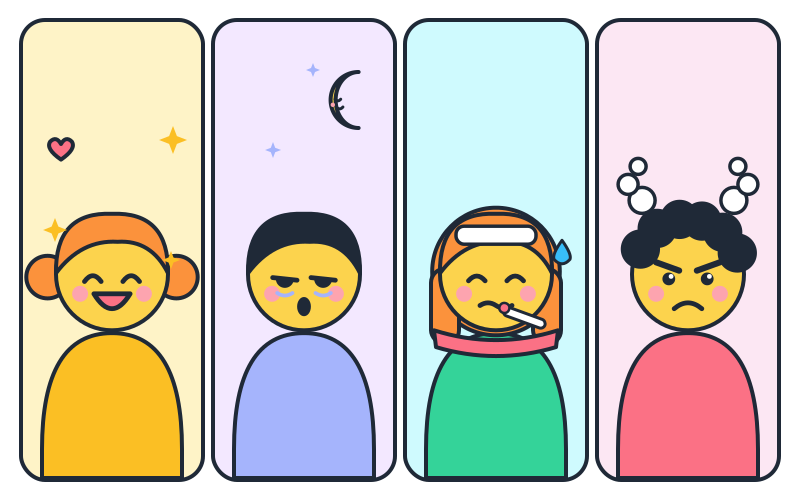
How each of them is right now: a state, so estar. The adjective agrees with the person. (EP says zangado for angry.)
Notice the event row. A party is not an object sitting somewhere; it takes place, so where it happens is part of what it is, and it takes . The permanent-or-temporary shorthand would have sent you to .
EP: says the happening-now row with and the infinitive: ., I am speaking.
Both are irregular, and both are unavoidable
They head the list of irregulars in the Portuguese verb groups, and there is no way round learning them. Here is the present:
| Person | ser | estar |
|---|---|---|
| | |
| / / | | |
| | |
| / | | |
| tu (EP) | | |
Brazil uses for the everyday you, and takes the same form as , so four rows cover what a Brazilian says:
?- Are you from Lisbon?.- We are here.
uses with friends and family: ., you are very nice. That difference is one of the places where Brazilian and European Portuguese part company.
Going further: The shorthand, and why it will let you down and the rest of the guide, when you want them. This lesson does not need them.
Practice
Practise this lesson
10-question session
One question at a time, mixed across the exercises in this lesson. Miss one and it comes back round before the end.
New words in this lesson



Portuguese · Free printables
Worksheets for this lesson
Worksheets with answer keys built in. Open any one to view, print or save.
Lesson 9 of 40 in this chapter