
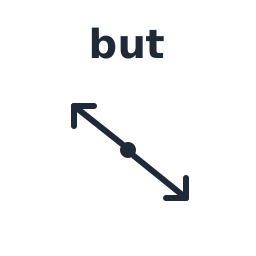
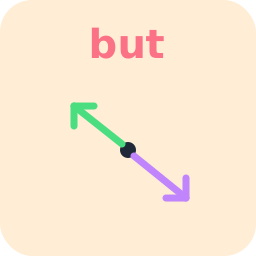
(kě shì) - but, however, yet in Mandarin
kěshìTraditional: 可是
Translation
but, however, yet
Word origin
可是 means but or however. 可 (kě) and 是 (shì) are both common grammatical words; 可 is an ideograph of 口 'mouth' with 丁, and 是 means to be, written 日 'sun' over 正 'correct'.
- Origin
- compound
- Root
- 可 (kě) + 是 (shì, to be)
Stroke order

可

是
Examples
,。
I want to go, but I have no time.
。
However, he doesn't agree.
,。
It's expensive, but worth it.
,。
He promised, but did not deliver.
可是 (kě shì) means but, however, yet. It is used as a conjunction in everyday Mandarin speech.
Where this fits
Used in
Stories
(19)点错了
2 min read · Core 1000
错过公车
3 min read · Core 1000
大伟的工作
3 min read · Core 1000
上班第一天
3 min read · Core 1000
今年去哪里
4 min read · Core 1000
卖东西的地方
4 min read · Core 1000
新工作的第一天
4 min read · Core 1000
错过的火车
5 min read · Core 5000
等了三年
5 min read · Core 5000
后面的字
5 min read · Core 5000
旧手机
5 min read · Core 5000
看场合
5 min read · Core 1000
李明的旅行
5 min read · Core 5000
那件事
5 min read · Core 5000
汤姆找路
5 min read · Core 5000
想起那个约定
5 min read · Core 5000
小华的比赛
5 min read · Core 5000
小云的梦想
5 min read · Core 5000
有钱没时间
5 min read · Core 5000
Grammar articles
(4)Add to review queue
Track this word in your spaced-repetition queue and be tested on it at the right interval.
Go to my review queueMandarin · Free printables
可是: worksheet, infographic and listicle
Free printable study downloads for the Mandarin word "可是" (but, however, yet): a worksheet with the answer key built in, an infographic, and a sentence listicle. Open any one to view, print or save.
Free for members
The printable worksheets, infographics and PDFs are free with an account. Start a free week and download as many as you like.
Start your free weekThis word is part of lesson 5.