
/boˈsotɾos/

Translation
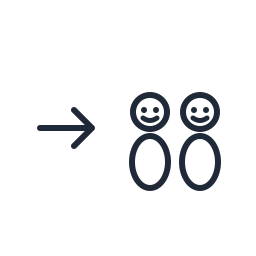
you all (informal, Spain)
Word origin
A compound of vos ('you', from Latin vos) and otros ('others', from Latin alteros). The reinforced form distinguished plural 'you' from the older singular use of vos.
- Origin
- Latin
- Root
- vos + alteros
Examples
.
You are next.
¿ ?
What do you all think about the plan?
.
You all have to decide.
.
You lot arrived late to yesterday's meeting.
¿ ?
Have any of you seen the car keys?
Where this fits
Used in
Grammar articles
(34)Spanish Advanced Grammar (C1-C2): The Constructions That Sound Native
Spanish Grammar Cheatsheet: The Essentials, One Page
Spanish Compound Tenses: the Future Perfect and Past Anterior (habré hablado, hube hablado)
Spanish Conditional: the 'Would' Tense, me gustaría and Polite Requests
Conjugating Spanish -ar Verbs in the Present Tense
Conjugating Spanish -er Verbs in the Present Tense
Conjugating Spanish -ir Verbs in the Present Tense
Conjugating Spanish Reflexive Verbs in the Present Tense
Spanish Verb Conjugation: The Complete Rules with Examples
Spanish Formal Commands: usted and ustedes
Spanish Future Tense: ir a + Infinitive and the Inflectional Future
The Spanish Imperfect Subjunctive: Formation, Examples and Practice
Spanish Imperfect: hablaba, comía, vivía and Only Three Irregulars
Spanish Irregular Verbs: The Groups Worth Learning and the Ones to Memorise
Spanish Negative Commands: Why no hables Borrows the Subjunctive
Spanish Direct and Indirect Object Pronouns: lo, la, le, se
The Spanish Present Perfect Subjunctive (haya hablado), with Practice
The Spanish Pluperfect Subjunctive and Conditional Perfect (hubiera hablado, habría hablado)
The Spanish Pluperfect (había hablado)
Spanish Possessive Pronouns: el mío, el tuyo, el suyo and the Long Possessives
Spanish Possessive Adjectives: mi, tu, su and Why Agreement Trips Beginners
Spanish Prepositional Pronouns (para mí, conmigo, entre tú y yo)
Spanish Present Perfect: he hablado, ha vivido, hemos visto
The Spanish Present Subjunctive: Forms, the Opposite-Vowel Rule, and Practice
Spanish Preterite: hablé, comí, viví and the Big Irregular Group
Spanish Reciprocal Verbs (se quieren, nos ayudamos - each other)
Spanish Reflexive Verbs: levantarse, llamarse, lavarse and the Pronoun Position
Spanish Regional Grammar: voseo (vos tenés), ustedes, and preterite vs perfect
Spanish Vocabulary: Spain vs Latin America (coche vs carro, móvil vs celular, zumo vs jugo)
Spanish Register: tu vs usted, vosotros vs ustedes (and how formal to be)
Saber vs Conocer: The Two Spanish Verbs for 'To Know'
Ser vs Estar: When to Use Each, with a Practice Quiz and Worksheets
Spanish Stem-Changing Verbs: e>ie, o>ue, e>i and the Boot Pattern
Spanish Subject Pronouns: yo, tú, él and Why You Usually Leave Them Out
Add to review queue
Track this word in your spaced-repetition queue and be tested on it at the right interval.
Go to my review queueSpanish · Free printables
vosotros: worksheet, infographic and listicle
Free printable study downloads for the Spanish word "vosotros" (you all (informal, Spain)): a worksheet with the answer key built in, an infographic, and a sentence listicle. Open any one to view, print or save.
Free for members
The printable worksheets, infographics and PDFs are free with an account. Start a free week and download as many as you like.
Start your free weekThis word is part of lesson 13.