
le
/byt/

Translation
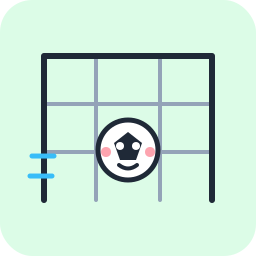
goal, aim
Word origin
From Old French but ('target, goal'), probably of Frankish origin and related to the verb bouter ('to push'). It means 'aim, goal'.
- Origin
- Frankish
- Root
- but
- English cognates
- butt
Grammar
Examples
cette ?
What is the aim of this meeting?
.
He scored a magnificent goal in the last minute.
.
My goal is to finish before noon.
.
My team scored a goal at the end of the match.
', j' .
With the aim of helping you, I prepared a plan.
Where this fits
Used in
Grammar articles
(60)French Adjective Agreement: Gender, Number, and Position Rules
French Advanced Grammar (C1-C2): The Constructions That Sound Native
French Adverbs of Manner: Forming -ment Adverbs
French Articles: Definite, Indefinite, Partitive, and the Article English Speakers Drop
Avoiding the Passive in French: on, se and the Active Recast
avoir or être: Choosing the French Auxiliary in the Passé Composé
French Grammar Cheatsheet: The Essentials, One Page
French Adjectives and Nouns with à or de
French Concession Clauses: However It Turns Out
French Conditionnel: Polite Requests, Hypothetical 'Would', and the Same Irregular Stems as the Future
Conjugating French -er Verbs in the Present Tense
Conjugating French -ir Verbs in the Present Tense
Conjugating French -re Verbs in the Present Tense
French Verb Conjugation: The Complete Rules with Examples
How to Say However, Although, Even Though and Despite in French
French Demonstrative Pronouns: celui, celle, ceux, celles
Reported Speech in French: Tense Backshift (dit que, a dit que)
Faire causatif: Having Things Done in French
quand + Future: The Tense English Refuses
French Greetings and Survival Phrases: Say Something Today
French Imperative: tu, nous, vous Commands and the Three Irregulars
French Impersonal Verbs: il y a, il faut, il fait and the Dummy Subject 'il'
French Intermediate Grammar (B1-B2): The Things That Stop You at the Plateau
French Interrogatives: qui, que, où, quand, comment, pourquoi, combien, quel
French quel and lequel: Which and Which One
French Irregular Verbs: The Core Set, the -ir Split and the Patterns That Repeat
French Negation Beyond pas: ne... que, ni... ni, aucun
French Noun Gender: Why Every Noun Is Le or La, and the Endings That Give It Away
French Noun Plurals: Add -s, Say Nothing - the Article Does the Work
French Object Pronouns: me, te, le, la, lui, nous, vous, leur and the Preverbal Position
The French Present Participle and Gerund (le participe présent et le gérondif)
French Passé Composé: avoir or être + Past Participle and the MRS VANDERTRAMP Set
Sequencing French Past Tenses: Passé Composé, Imparfait and Plus-que-parfait Together
laisser, voir and entendre + Infinitive in French
The French Pluperfect (le plus-que-parfait): The Past Before the Past
French Possessive Pronouns: le mien, le tien, le sien, le nôtre, le vôtre, le leur
French Possessives: mon, ma, mes and the mon-Before-Vowel Trap
French Prepositions: à, de, en, dans, sur, chez and the Mandatory Contractions
French Pronouns Y and EN: there, some, of it, of them
French Reflexive Verbs: se laver, se lever, s'appeler and the Singular Pronouns
j'aurais dû, tu aurais pu: French Regrets and Reproaches
French Relative Pronouns After a Preposition: lequel, auquel, duquel
French Relative Pronouns: qui, que, dont, où and How to Glue Clauses Together
Reported Questions and Commands in French
French si Clauses: The Three Types of Conditional Sentence
French Slang and Verlan: How French People Actually Talk
French Stressed Pronouns: moi, toi, lui, elle, nous, vous, eux, elles
French Subject Pronouns: je, tu, il, nous, vous, ils and the on That Replaced nous
The French Subjunctive After Conjunctions
The French Subjunctive After Doubt, Emotion and Opinion
The French Subjunctive After Superlatives and Exclusives
The French Subjunctive in Relative Clauses
The French Past Subjunctive: subjonctif passé
The French Present Subjunctive: How to Form It
Subjunctive or Indicative: How to Choose in French
French Superlatives: le plus, le moins, and the Irregulars
French Time Expressions: depuis, pendant, il y a and pour
Venir de + Infinitive: the French Recent Past (to have just done something)
The French Passive Voice (la voix passive)
French Word Order: SVO, the Object Pronoun Inversion, and Six Rules That Cover 90% of Sentences
Add to review queue
Track this word in your spaced-repetition queue and be tested on it at the right interval.
Go to my review queueFrench · Free printables
but: worksheet, infographic and listicle
Free printable study downloads for the French word "but" (goal, aim): a worksheet with the answer key built in, an infographic, and a sentence listicle. Open any one to view, print or save.
Free for members
The printable worksheets, infographics and PDFs are free with an account. Start a free week and download as many as you like.
Start your free weekThis word is part of lesson 17.