
/de/
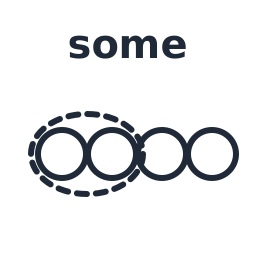
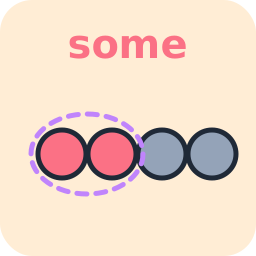
Translation
some, of the (plural indefinite and partitive article; also contraction of de + les)
Word origin
A contraction of de ('of, from') and les ('the', plural), so literally 'of the'. Both elements descend from Latin: de ('from') and ille ('that').
- Origin
- Latin
- Root
- de
Examples
.
There are some clouds in the sky this morning.
au .
She bought some apples at the market.
J' .
I can hear voices in the hallway.
.
We saw some fish during our boat trip.
.
There are still some seats left for Saturday's concert.
remplit deux fonctions distinctes. Premierement, c'est l'article indefini pluriel (des amis, des problemes), equivalent de some ou d'un pluriel sans article en anglais. Deuxiemement, c'est la contraction de de + les (je viens des Etats-Unis, le directeur des ressources humaines). Cette double nature est une source frequente de confusion.
Apres un adverbe de quantite (beaucoup, peu, assez), des se remplace par de seul : beaucoup d'amis (non beaucoup des amis). De meme, a la forme negative, l'article indefini pluriel devient de/d' : je n'ai pas d'amis (non pas des amis), sauf dans les tournures qui mettent en contraste deux groupes (ce ne sont pas des amis, ce sont des collegues).
Where this fits
Used in
Stories
(4)Grammar articles
(19)French Adjective Agreement: Gender, Number, and Position Rules
French Adjective Position: Default, BAGS, and the Meaning Shifts
French Articles: Definite, Indefinite, Partitive, and the Article English Speakers Drop
French Grammar Cheatsheet: The Essentials, One Page
French Demonstratives: ce, cet, cette, ces and the -ci / -là Distance Split
dont in Depth: The French de Relative Pronoun
French Intermediate Grammar (B1-B2): The Things That Stop You at the Plateau
French Interrogatives: qui, que, où, quand, comment, pourquoi, combien, quel
French Negation Beyond pas: ne... que, ni... ni, aucun
French Negation: ne... pas, jamais, rien, personne and the Colloquial ne-Drop
French Noun Gender: Why Every Noun Is Le or La, and the Endings That Give It Away
French Noun Plurals: Add -s, Say Nothing - the Article Does the Work
The French Present Participle and Gerund (le participe présent et le gérondif)
French Partitives and 'de': du, de la, des and the Negation Rule
Passé Composé vs Imparfait: How to Choose Between the Two French Past Tenses
French Possessive Pronouns: le mien, le tien, le sien, le nôtre, le vôtre, le leur
French Prepositions: à, de, en, dans, sur, chez and the Mandatory Contractions
French Pronouns Y and EN: there, some, of it, of them
The French Passive Voice (la voix passive)
Add to review queue
Track this word in your spaced-repetition queue and be tested on it at the right interval.
Go to my review queueFrench · Free printables
des: worksheet, infographic and listicle
Free printable study downloads for the French word "des" (some, of the (plural indefinite and partitive article; also contraction of de + les)): a worksheet with the answer key built in, an infographic, and a sentence listicle. Open any one to view, print or save.
Free for members
The printable worksheets, infographics and PDFs are free with an account. Start a free week and download as many as you like.
Start your free weekThis word is part of lesson 1.