

Translation
in
Test yourself on en
Three quick questions. No account needed.
Know this word? Create a free account to track it.
Examples
.
I am in the house.
.
I am going into the house.
.
She lives in a big city.
.
At that time we did not know the truth.
?
Do you think about that in your language?
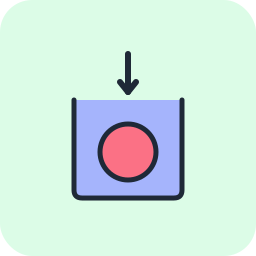
means "in" when nothing is moving and "into" when something is, and the difference is carried entirely by the accusative on the noun: against . That one -n replaces a whole set of separate prepositions in other languages, and the same trick works after , and . also does duty for time, as in , where nothing moves and so no -n appears.
Where this fits
Used in
Stories
(8)La letero
1 min read · Core 1000
Cent homoj
1 min read · Core 1000
Vido al la maro
2 min read · Core 1000
Nia gasto
2 min read · Core 1000
Kiel mi scios, kiu estas vi?
2 min read · Core 1000
Salutojn el la kongreso
2 min read · Core 1000
Poste estis trinkata teo
3 min read · Core 1000
Mil vortoj
3 min read · Core 1000
Grammar articles
(52)The Esperanto Accusative: What -n Does, and Its Four Jobs
Adverbs in Esperanto: -e, and Why estas varme Has No Noun
Esperanto Suffixes -et-, -eg-, -ul-, -ist- and -an-
Esperanto Apposition: la urbon Parizon and the Echoed -n
Esperanto Capital Letters: Esperanto, franco, lundo
Esperanto Compound Words: Reading Long Words From the Right
Esperanto Correlatives in Use: tiu kiu, tio kion and More
What to Read in Esperanto: The Bookshelf, In Order
Esperantismo and the Interna Ideo: What Esperanto Is For
Esperanto hodiaŭ: Where the Language Actually Lives
Esperanto and the Religions: An Unexpected History
Esperanto False Friends: Words That Lie to English Speakers
The Esperanto Calendar: Zamenhofa Tago and Other Festivals
Finvenkismo and Raŭmismo: Esperanto's Big Argument
Who Decides Correct Esperanto? Fundamento and Akademio
Gender in Esperanto: -in-, ge-, and the Reform That Waits
The History of Esperanto in Ten Episodes, 1859 to Today
Homaranismo: Zamenhof's Creed, Kept Apart from Esperanto
Esperanto -ig- and -iĝ-: Making and Becoming
Esperanto Impersonal Sentences: oni, pluvas, estas varme
Esperanto Question Words: Kiu, Kio, Kie and the Ki- Table
How to Actually Learn Esperanto, and Why It Is Faster
After the Esperanto Course: What to Do Next (Kien de Ĉi Tie)
Esperanto Food and Cooking Words: Kuirarto kaj Manĝo
The Esperanto Letter Ĥ: The Least-Loved Letter
The Esperanto Congress: Universala Kongreso and Its Words
Esperanto Body Parts: La Korpo, Head to Foot
Esperanto Grammar on One Page: All 16 Rules
Esperanto Countries and Nationalities: -io, -ujo and -ano
Esperanto Language Names: la angla, la anglan and angle
Esperanto Letter Writing: Register and Politeness
Esperanto Measurements: Units, Decimals and Rates Aloud
Esperanto Music and Films: What Is Worth Your Ears
Unofficial Esperanto Affixes: -oz-, -iv- and the Rest
Oomoto and the Bahá'ís: Two Faiths That Took Up Esperanto
Esperanto Participles as Nouns: parolanto, venkinto
Esperanto Particles: ĉi tiu, ju...des, ajn and mem
The Esperanto Passive: -ata, -ita, -ota and esti
Personal Names in Esperanto: Johano, John or Ĝon?
Esperanto Personal Pronouns: mi, vi, li, ŝi and mia
Esperanto Prepositions: The Full List, With Examples
Esperanto pri- Verbs: pripensi, priskribi, pridemandi
Esperanto Proverbs: 15 From Zamenhof's Proverbaro
Esperanto Rhyme and Metre: Counting Syllables, Adasismo
Scientific Esperanto: The Register That Almost Won
Esperanto Subordinate Clauses: ke, kiu, kiam and Commas
Telling the Time and Dates in Esperanto: je la tria
Esperanto Transitivity: Which Verbs Take an Object
Tricky Esperanto Prepositions: je, po and Direction -n
Esperanto Verbs and Prepositions: Which One Each Verb Takes
Esperanto Affixes: The Full List of Prefixes and Suffixes
Esperanto Word Order: Emphasis, ne and ankaŭ
Add to review queue
Track this word in your spaced-repetition queue and be tested on it at the right interval.
Meet this word in a story
Every course has graded stories written only with words you have been taught, plus grammar drills, a games arcade and printable worksheets. Chapters 1 and 2 are free.
Chapters 1 and 2 free, forever. Plus: 7 days free, then $5 a month for all eleven languages.
Esperanto · Free printables
en: worksheet, infographic and listicle
Free printable study downloads for the Esperanto word "en" (in): a worksheet with the answer key built in, an infographic, and a sentence listicle. Open any one to view, print or save.
This word is taught in chapter 1, lesson 3: Your first ten words.