
l'
/ɔʁ/
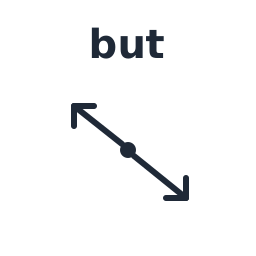
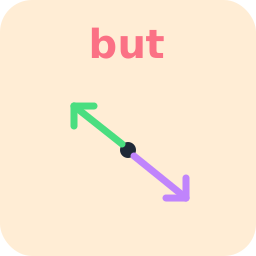
Translation
gold; but, now (conjunction)
Word origin
As a noun ('gold'), from Latin aurum ('gold'); as a conjunction ('now, yet'), from Vulgar Latin hora ('hour, now'), from Latin hora. The noun and conjunction are unrelated despite the shared spelling.
- Origin
- Latin
- Root
- aurum
- English cognates
- aureate, oriole
Other proposed origins
- The noun 'gold' is from Latin aurum. (aurum)
- The conjunction 'now, yet' is from Vulgar Latin hora, from Latin hora ('hour'). (hora)
Grammar
Examples
l' .
The price of gold has risen a great deal in recent years.
; , ' .
He thought he was right; however, he had been completely wrong.
; , .
She was looking for a simple solution; but, the situation was far more complex.
-.
Her gold ring comes from her grandmother.
l' cette .
The price of gold has risen a lot this year.
Or a deux emplois distincts : le nom masculin (gold) et la conjonction de coordination (but, now, however). La conjonction or introduit une proposition qui contraste legerement ou developpe avec ce qui precede - moins fort que mais et plus litteraire.
En or (made of gold, excellent) est courant : un prof en or (an excellent teacher). Age d'or (golden age) et regle d'or (golden rule) sont des expressions figees. La conjonction or s'emploie surtout dans les textes ecrits formels et les raisonnements (dissertations, argumentation).
Where this fits
Used in
Grammar articles
(72)French Adjective Agreement: Gender, Number, and Position Rules
French Adjective Position: Default, BAGS, and the Meaning Shifts
French Advanced Grammar (C1-C2): The Constructions That Sound Native
Comparing French Adverbs: plus vite, le mieux, and the Irregulars
French Adverbs of Manner: Forming -ment Adverbs
French Articles: Definite, Indefinite, Partitive, and the Article English Speakers Drop
Avoiding the Passive in French: on, se and the Active Recast
avoir or être: Choosing the French Auxiliary in the Passé Composé
French Grammar Cheatsheet: The Essentials, One Page
French Cognate Patterns: -tion, -té, -eux, -ment and the Endings That Hand You Thousands of Words
French Adjectives and Nouns with à or de
French Concession Clauses: However It Turns Out
French Conditionnel: Polite Requests, Hypothetical 'Would', and the Same Irregular Stems as the Future
The French Conditional Perfect: j'aurais fait, elle serait venue
Conjugating French -re Verbs in the Present Tense
French Verb Conjugation: The Complete Rules with Examples
How to Say Therefore, So, Thus and Hence in French
How to Say However, Although, Even Though and Despite in French
French Demonstrative Forms: Drilling ce, cet, cette, ces
French Demonstrative Pronouns: celui, celle, ceux, celles
French Demonstratives: ce, cet, cette, ces and the -ci / -là Distance Split
Reported Speech in French: Tense Backshift (dit que, a dit que)
dont in Depth: The French de Relative Pronoun
Faire causatif: Having Things Done in French
The French Future Perfect: futur antérieur
quand + Future: The Tense English Refuses
French Future Tense: Futur Proche, Futur Simple, and the Irregular Stems
French Greetings and Survival Phrases: Say Something Today
French Imperative: tu, nous, vous Commands and the Three Irregulars
French Impersonal Verbs: il y a, il faut, il fait and the Dummy Subject 'il'
Infinitive or Subjunctive: The French Same-Subject Rule
French Intermediate Grammar (B1-B2): The Things That Stop You at the Plateau
French Interrogatives: qui, que, où, quand, comment, pourquoi, combien, quel
French quel and lequel: Which and Which One
French Irregular Verbs: The Core Set, the -ir Split and the Patterns That Repeat
French Negation Beyond pas: ne... que, ni... ni, aucun
French Negation: ne... pas, jamais, rien, personne and the Colloquial ne-Drop
French Noun Gender: Why Every Noun Is Le or La, and the Endings That Give It Away
French Noun Plurals: Add -s, Say Nothing - the Article Does the Work
French Object Pronouns: me, te, le, la, lui, nous, vous, leur and the Preverbal Position
The French Present Participle and Gerund (le participe présent et le gérondif)
French Partitives and 'de': du, de la, des and the Negation Rule
Passé Composé vs Imparfait: How to Choose Between the Two French Past Tenses
French Passé Composé: avoir or être + Past Participle and the MRS VANDERTRAMP Set
laisser, voir and entendre + Infinitive in French
The French Pluperfect (le plus-que-parfait): The Past Before the Past
French Possessive Pronouns: le mien, le tien, le sien, le nôtre, le vôtre, le leur
French Possessives: mon, ma, mes and the mon-Before-Vowel Trap
French Prepositions: à, de, en, dans, sur, chez and the Mandatory Contractions
French Pronouns Y and EN: there, some, of it, of them
French Question Words: qui, que, quand, où, comment, pourquoi and the Three Ways to Ask
French Reflexive Verbs: se laver, se lever, s'appeler and the Singular Pronouns
j'aurais dû, tu aurais pu: French Regrets and Reproaches
French Relative Pronouns After a Preposition: lequel, auquel, duquel
French Relative Pronouns: qui, que, dont, où and How to Glue Clauses Together
Reported Questions and Commands in French
French si Clauses: The Three Types of Conditional Sentence
French Stressed Pronouns: moi, toi, lui, elle, nous, vous, eux, elles
French Subject Pronouns: je, tu, il, nous, vous, ils and the on That Replaced nous
The French Subjunctive After Conjunctions
The French Subjunctive After Doubt, Emotion and Opinion
The French Subjunctive After Superlatives and Exclusives
The French Subjunctive in Relative Clauses
The French Past Subjunctive: subjonctif passé
The French Present Subjunctive: How to Form It
Subjunctive or Indicative: How to Choose in French
French Superlatives: le plus, le moins, and the Irregulars
French Time Expressions: depuis, pendant, il y a and pour
Venir de + Infinitive: the French Recent Past (to have just done something)
French Verbs with à, de or Nothing Before an Infinitive
The French Passive Voice (la voix passive)
French Word Order: SVO, the Object Pronoun Inversion, and Six Rules That Cover 90% of Sentences
Add to review queue
Track this word in your spaced-repetition queue and be tested on it at the right interval.
Go to my review queueFrench · Free printables
or: worksheet, infographic and listicle
Free printable study downloads for the French word "or" (gold; but, now (conjunction)): a worksheet with the answer key built in, an infographic, and a sentence listicle. Open any one to view, print or save.
Free for members
The printable worksheets, infographics and PDFs are free with an account. Start a free week and download as many as you like.
Start your free weekThis word is part of lesson 15.