
強調句(cleft ,台灣也稱「分裂句」或「強調句型」)把一個句子拆成兩個部分,讓其中一個部分成為焦點。cleft 是「分裂」的意思。句子的事實不變,只有強調的重點改變。
中文可以靠語氣說「是 John 打破的」,或用「是……的」句型:「打電話的人是我姊姊」。英文也有同樣的功能,只是結構不同。學校教的 It is ... that ... 強調句型,其實就是強調句的其中一種。
| 強調的焦點 | 句子 |
|---|---|
| 沒有特別強調 | John . |
| 是 John,不是別人 | John . |
| 是那扇窗戶 | John . |
| 是那個動作 | John . |
說話時,只要把那個字唸大聲一點就行:John broke it。但寫作時沒辦法這樣做,所以英文會先搭好一個「空位」,再把要強調的字放進去。
It was John who:It 開頭的強調句
句型是: + 動詞 + 焦點 + / + 其餘部分。
| 強調的是 | 用哪個字 | 例句 |
|---|---|---|
| 人 | 或 | . |
| 事物 | . | |
| 時間 | . | |
| 地點 | . |
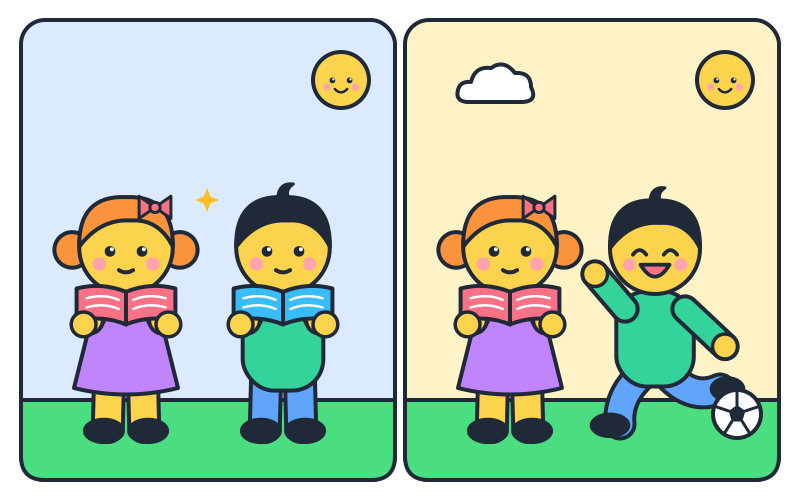
- .
- .
是女孩在看書,是男孩在踢足球,不是反過來。who's 就是 who is。
be 動詞跟著事件發生的時間走::m{w="It was:b Sam:a who:b called."}(昨天),:m{w="It is:b the cost:a that:b worries me."}(現在)。
be 動詞永遠是單數,因為主詞是 it::m{w="It was:b my parents:a who:b paid."} 不能說 It were。(英格蘭北部有些方言會說 it were,但標準英文是 it was。)
it 開頭的強調句最自然的用途是糾正別人。放進 not 就可以:
.. .
What I need is:What 開頭的強調句
what 開頭的強調句順序相反:背景先講,重要的部分留到句尾:
+ 背景 + / + 焦點。
.(我需要的是一個假期。).(讓我擔心的是費用。).(她想要的是真相。)
聽的人要等到最後才聽到重點,所以這個句型很適合用來表達觀點::m{w="What:b I want is:b an answer:a."}
通常前後兩個部分的時間一致::m{w="What:b I need is:b a holiday:a."}(現在),:m{w="What:b I needed was:b a holiday:a."}(當時)。
也可以把順序反過來,what 的部分放在後面::m{w="A holiday:a is what:b I need."}、:m{w="[That:a]'s what:b I meant."}
What he did was tell:強調動作
想強調的是一個動作時,用 + 主詞 + / + / + 原形動詞:
..
不能說 What he did was told everyone。比較正式的書面英文有時會在動詞前加 to::m{w="What:b he did was:b to tell:a everyone."}
All I did was:「我只不過……」
的意思是「我做的就只有這樣,沒別的了」,常用來替自己辯解:
.(我只不過問了一個問題。).(我只說了聲哈囉。).(她要的只是一個答案。)
除了 what,也可以換成名詞: 、 、 、 :
| 框架 | 例句 |
|---|---|
. | |
. | |
. |
該用哪一種強調句?
| 你想要…… | 用 | 例句 |
|---|---|---|
| 糾正別人 | 開頭 | Sam , . |
| 表達觀點 | 開頭 | . |
| 強調一個動作 | ... | . |
| 表示「只有這個」 | ... | . |
一個強調句就能把重點講清楚。連用三個,聽起來就像在跟不在場的人吵架。
正式文體還有另一種增加份量的方法:倒裝。請看倒裝與詞序。
台灣學習者最常犯的錯
學校常把強調句教成「It is / was ... that ... 句型」,並教一個判斷法:把 It is / was 和 that 拿掉,剩下的部分仍是一個完整的句子。這個方法有用,但容易讓人只記得 that,忘了其他細節:
| 錯誤 | 正確 | 原因 |
|---|---|---|
| It were my parents. | It was my parents. | 主詞是 it,be 動詞永遠是單數 |
| what he did was told | what he did was tell | 後面用原形動詞 |
| All I did was asked. | All I did was ask. | 後面用原形動詞 |
| It was the noise what woke me. | It was the noise that woke me. | 標準英文用 |
另外幾點要小心:
- 中文的「是……的」不能逐字搬過來。 中文說「我是昨天來的」,很多人會寫成 I was came yesterday,多塞了一個 be 動詞。一般只要說 I came yesterday 就好;真的要強調時間,才說 It was yesterday that I came。
- 別濫用。 中文的「是……的」很常用,所以學習者容易把強調句講得太多。需要糾正或強調時才用。
接下來做什麼
- 糾正一個錯誤的想法:It wasn't ... who ..., it was ...
- 說說你這週需要什麼:What I need is ...
- 做下面的練習。
想看英文原版的完整說明,請見Cleft sentences 英文版。想把英文從頭學到尾,請從英文課程開始。