
當一個動詞後面接另一個動詞時,第二個動詞是 -ing 形式(動名詞,gerund),或是 to + 原形動詞(不定詞,infinitive)。由前面那個動詞決定::m{w="I enjoy cooking:a."} 但是 .
| 前面的動詞 | 接什麼 | 例句 |
|---|---|---|
| , , | -ing | . |
| , , | + 原形 | . |
| , , | 兩種都可,意思相同 | . |
| , , | 兩種都可,意思不同 | smoking. |
| , , | -ing | . |
| , , | + 原形 | . |
| , , , | 原形,不加 | . |
動名詞(-ing)和不定詞(to + 原形)
動名詞是把 -ing 形式當名詞用。它可以放在句首,或接在動詞後面:
Swimming .(游泳對你有益。).(我喜歡閱讀。)
不定詞是 to + 原形動詞:
.(我想離開。).(她的計畫是要贏。)
-ing 形式也用在進行式(I am reading),但那時它是動詞的一部分,不是名詞,不屬於動名詞。
後面接 -ing 的動詞:enjoy, finish, mind
這些動詞後面要接 -ing,不能接 to::m{w="I enjoy reading:a."},不是 I enjoy to read。
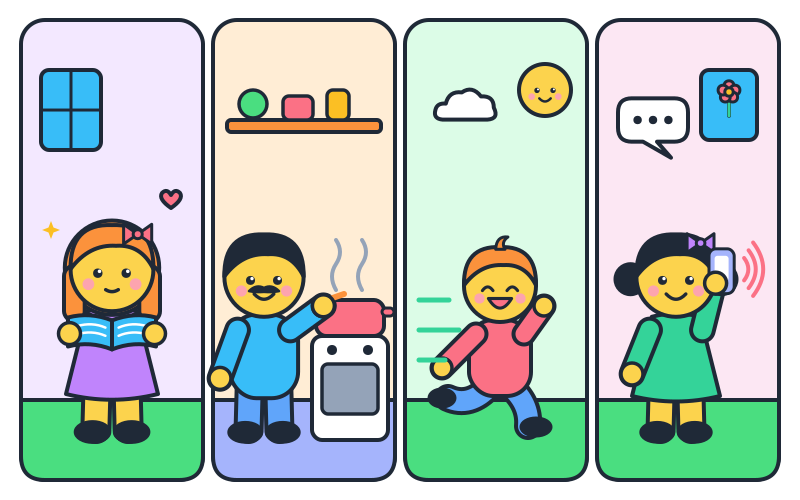
- .
- .
- .
- .
她喜歡閱讀。他不介意煮飯(對他來說沒問題)。他一直跑(沒有停)。她說個不停。
| 動詞 | 例句 |
|---|---|
. | |
. | |
? | |
. | |
. | |
. | |
. | |
smoking. |
Do you mind waiting? 的意思是:你介意等一下嗎?(對你來說會不會造成困擾?)
後面接 to 的動詞:want, decide, hope
這些動詞後面要接 to + 原形動詞,不能接 -ing::m{w="I want to go:b."},不是 I want going。
| 動詞 | 例句 |
|---|---|
. | |
. | |
. | |
. | |
. | |
. | |
. | |
. | |
. | |
. |
learned 和 learnt 在英式英文裡都對,美式英文用 learned。
like, love, start:兩種都可以,意思相同
這些動詞兩種形式都能接,意思幾乎一樣:
| 動詞 | 接 -ing | 接 to + 原形 |
|---|---|---|
. | . | |
. | . | |
. | . | |
raining. | . | |
singing. | . |
但是 would like 只能接 to,would love 也幾乎都接 to:
.(不能說 I'd like coming).
prefer 和 would rather 的接法,請看 would rather。
stop, remember, try:接法不同,意思也不同
這幾個動詞兩種形式都對,但說的是不同的事:
| 動詞 | 接 -ing | 接 to |
|---|---|---|
smoking. | . | |
. | . | |
. | . | |
. | . |
- He stopped smoking:他現在不抽菸了。
- He stopped to smoke:他停下手邊的工作,為了去抽菸。
- Try adding salt:加鹽看看,試試是不是更好。I tried to open it:我很努力想打開它(也許沒成功)。
remember 和 forget 後面,-ing 往回看,to 往前看:
I remember locking the door (the locking came first)
Remember to lock the door (the locking comes later)
Timeline from past to future, with now marked.
介系詞後面:一律接 -ing
介系詞(at、in、of、about、for、before、after、without)後面要接 -ing 形式。這一點對台灣學習者很重要,因為中文的介系詞後面直接放動詞也沒問題,英文卻不行。
| 介系詞 | 例句 |
|---|---|
. | |
. | |
. | |
. | |
. |
I'm used to getting up early(我習慣早起了)和 I used to get up early(我以前都早起)不一樣:請看 used to 和 would。
有一個小例外:but 後面接 to::m{w="I had no choice but to leave:b."}
easy to、nice to meet you:形容詞 + to
形容詞後面如果有介系詞,就接 -ing(good at cooking)。沒有介系詞時,形容詞後面通常接 to + 原形動詞(例外是 worth 和 busy:worth seeing、busy cooking):
| 句型 | 例句 |
|---|---|
| + 形容詞 + | . |
| 事物 + 形容詞 + | . |
| 人 + 形容詞 + | . |
| 形容詞 + + 人 | . |
It's easy to:做這件事感覺如何
It's + 形容詞 + to 說的是做一件事的感覺:容易、困難、愉快、重要。
.(見面打招呼)..
也可以直接用那樣東西當主詞,這時句尾的 it 要拿掉::m{w="This book is easy to read:b."},不是 easy to read it。書本身就是你讀的東西,不必再說一次。
Happy to help:人的感受
表示感受的形容詞後面,to + 原形動詞說出原因:
.(對方剛說了壞消息)..
Nice to meet you 是 It's nice to meet you 的簡短說法。聊完要道別時,說 Nice to meet you 或 Nice meeting you 都可以。
要說是誰覺得容易或困難,就在 to 前面加 for + 人::m{w="It's hard for me to get:b up early."}
不加 to 的情況:can, must, make, let
在情態助動詞(can、must、should、will、might)之後,以及 make 和 let 之後,動詞不加 to:
.(不能說 must to go)..(不能說 made me to wait).
make 和 do 怎麼分,請看 make 和 do 的差別。
台灣學習者最常犯的錯
中文的動詞不管放在哪裡,形式都不變,「我喜歡游泳」、「我想游泳」、「我很會游泳」裡的「游泳」完全一樣。英文卻要依前面的詞,改變第二個動詞的形式,所以這類錯誤特別常見:
| 錯誤 | 正確 | 原因 |
|---|---|---|
| I enjoy to cook. | I enjoy cooking. | + -ing |
| I want going home. | I want to go home. | + |
| look forward to meet | look forward to meeting | 這個 是介系詞 |
| I must to go. | I must go. | 後面不加 |
| She made me to wait. | She made me wait. | 後面不加 |
| I'd like going. | I'd like to go. | + |
| easy to read it | easy to read | 句尾不加 |
兩個特別要留意的地方:
- 看到 不要自動接原形動詞。 學校常教「to 後面接原形動詞」,但這條規則在 look forward to、be used to、be committed to 這類片語裡不成立,因為這裡的 to 是介系詞。
- 不要照中文的順序翻。 中文說「謝謝你幫我」,很多人寫成 Thank you for help me 或 Thanks for to help。英文要說 Thank you for helping me。介系詞 for 後面接 -ing。
接下來做什麼
- 說出三件你喜歡做的事:I enjoy...
- 說出三件你今年想做的事:I want to...
- 做下面的練習。
想看英文原版的完整說明,請見Gerund and infinitive 英文版。想把英文從頭學到尾,請從英文課程開始。