
/me/
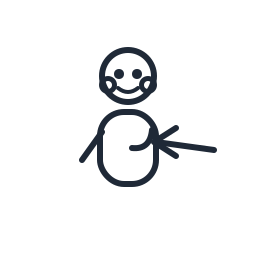
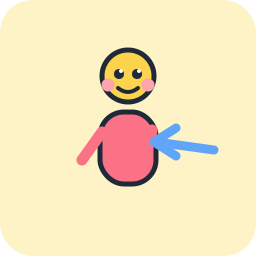
Translation
me, myself
Word origin
From Latin me, accusative and ablative of ego ('I'). A core Indo-European pronoun.
- Origin
- Latin
- Root
- me
- English cognates
- me
Examples
Ana.
My name is Ana.
¿ ?
Can you help me for a moment?
.
I get up very early on Mondays.
.
My head has been hurting for several hours.
.
I think your idea for the project is very good.
Where this fits
Used in
Stories
(25)El amigo de mi padre
1 min read · Core 1000
Lo mismo de siempre
2 min read · Core 1000
Un día con María
2 min read · Core 1000
A Paula le duele todo
3 min read · Core 5000
Alguien que lo haya visto
3 min read · Core 5000
Cocinar juntos
3 min read · Core 1000
¿El coche o el carro?
3 min read · Core 5000
El correo a la jefa
3 min read · Core 5000
El mejor café de la calle
3 min read · Core 5000
El primer día de trabajo
3 min read · Core 1000
Es importante que descanses
3 min read · Core 5000
La llamada
3 min read · Core 1000
La nota de Rafa
3 min read · Core 5000
Laura busca piso
3 min read · Core 5000
Lo que dijo el médico
3 min read · Core 5000
Media docena de huevos
3 min read · Core 5000
No creo que sea grave
3 min read · Core 5000
No estoy embarazada
3 min read · Core 5000
Pasen y siéntense
3 min read · Core 5000
Por lo tanto, decidimos
3 min read · Core 5000
Por todas partes
3 min read · Core 5000
Se me cayó todo
3 min read · Core 5000
Tú y tu hermano
3 min read · Core 5000
El primer día de Laura
4 min read · Core 1000
Palabras de cocina
5 min read · Core 1000
Grammar articles
(78)Spanish Accent Rules: agudas, llanas, esdrújulas (café, árbol, rápido)
Spanish Adjective Agreement: Endings, Position, and the Shortened Pre-Nominal Set
Spanish Advanced Grammar (C1-C2): The Constructions That Sound Native
Spanish Adverbs of Place, Time and Degree (aquí, todavía, muy vs mucho)
Spanish Articles: Definite vs Indefinite, Gender, Number, and When English Doesn't Use One
Spanish Causative Verbs: hacer, dejar, mandar + Infinitive (me hizo esperar, le hice arreglar el coche)
Spanish Grammar Cheatsheet: The Essentials, One Page
Spanish Cleft Sentences and Emphasis: fue Pedro quien, lo que quiero es
Spanish Comparatives: más que, menos que, tan como and the Four Irregulars
Spanish Correlative Comparison: cuanto más... más, cada vez más, el doble
Spanish Conditional: the 'Would' Tense, me gustaría and Polite Requests
Conjugating Spanish -ar Verbs in the Present Tense
Conjugating Spanish Reflexive Verbs in the Present Tense
Spanish Verb Conjugation: The Complete Rules with Examples
How to Say Therefore, So and Because in Spanish: por lo tanto, así que, porque
How to Say However, Even Though and Despite in Spanish: sin embargo, aunque, a pesar de
Este or Esta? Matching Spanish Demonstratives to Gender and Number
Demonstrative Pronouns in Spanish: Este, Ese, Aquel and the Three-Way This and That
Spanish Demonstrative Adjectives: este, ese, aquel and the Three-Way Distance Split
The Spanish Diacritic Accent: tú vs tu, sí vs si, qué vs que
Spanish False Friends (Part 1): embarazada, actual, realizar, sensible
Spanish False Friends (Part 2): molestar, recordar, soportar, pretender
Spanish Formal Commands: usted and ustedes
The Spanish Gerund (-ndo): Adverbial Uses and the Mistakes to Avoid (salió corriendo)
Spanish Greetings and Survival Phrases: Say Something Today
Gustar and Verbs Like It: Why Spanish Says the Coffee Pleases You
Spanish Fixed Similes: dormir como un tronco, más bueno que el pan, terco como una mula
Spanish Time and Frequency Phrases: de vez en cuando, a menudo, de repente, poco a poco
Spanish Imperative: Affirmative Tú Commands and the Eight Irregulars
The Spanish Imperfect Subjunctive: Formation, Examples and Practice
Spanish Imperfect: hablaba, comía, vivía and Only Three Irregulars
Spanish Impersonal Verbs: hay, hace, se habla and the No-Subject Constructions
Spanish Indefinites: alguno, ninguno, alguien, nadie, algo, nada, cualquiera
The Spanish Infinitive as a Noun and After Prepositions (antes de salir, al llegar)
Spanish Slang and Chat: decoding tío, guay, o sea, xq (the informal register)
Spanish Intermediate Grammar (B1-B2): The Things That Stop You at the Plateau
The Spanish Neuter lo (lo bueno, lo que, lo de)
Advanced Spanish Negation: ni, sino vs pero, tampoco, ni siquiera
Spanish Negation: no, nunca, nadie and Why Double Negatives Are Correct
Spanish Negative Commands: Why no hables Borrows the Subjunctive
Spanish Direct and Indirect Object Pronouns: lo, la, le, se
Spanish Perception Verbs + Infinitive or Gerund: la vi salir, lo oí cantando
The Spanish Present Perfect Subjunctive (haya hablado), with Practice
The Spanish Pluperfect Subjunctive and Conditional Perfect (hubiera hablado, habría hablado)
The Spanish Pluperfect (había hablado)
Spanish Politeness: Softening Requests (¿Podría...?, ¿Te importaría...?, quisiera)
Por vs Para in Spanish: The Rules, a Chart, and a Practice Quiz
Spanish Possessive Adjectives: mi, tu, su and Why Agreement Trips Beginners
Spanish Prepositional Pronouns (para mí, conmigo, entre tú y yo)
Spanish Compound Prepositions and Tricky Choices: delante de, a pesar de, soñar con
Spanish Prepositions: de, a, en, con, por, para and the Two Contractions
Spanish Pronoun Order: Indirect Before Direct, and the le-to-se Rule
Spanish Punctuation and Capitalisation: the opening ¿ and ¡, lowercase lunes and español
Spanish Quantifiers: mucho, poco, demasiado, todo, cada (mucha gente vs trabaja mucho)
Spanish Question Words: qué, quién, cuándo, dónde, cómo, cuál, cuánto, por qué
Spanish Reflexive Verbs: levantarse, llamarse, lavarse and the Pronoun Position
Spanish Proverbs (Refranes): Más vale tarde que nunca, A quien madruga Dios le ayuda
Spanish Regional Grammar: voseo (vos tenés), ustedes, and preterite vs perfect
Spanish Register: tu vs usted, vosotros vs ustedes (and how formal to be)
Advanced Spanish Relative Pronouns: el que, el cual, lo cual and cuyo
Spanish Relative Pronouns: que, quien, lo que, donde and cuando
Reported Questions and Commands in Spanish (me preguntó si, me dijo que viniera)
Reported Speech in Spanish: tense backshift (dice que, dijo que)
The Spanish Accidental se (se me cayó, se me olvidó)
Spanish Set Phrases with tener, dar, hacer, echar (tener ganas, echar de menos, hacer falta)
Si Clauses in Spanish: Real and Unreal Conditions (si llueve, si tuviera, si hubiera)
Spanish Stem-Changing Verbs: e>ie, o>ue, e>i and the Boot Pattern
Spanish Subject Pronouns: yo, tú, él and Why You Usually Leave Them Out
The Spanish Subjunctive in Adverbial Clauses: Rules and Practice
Subjunctive vs Indicative in Spanish: Doubt, Denial and the Negation Flip
Spanish Subjunctive After Emotion
The Spanish Subjunctive in Relative (Adjective) Clauses, with Practice
Spanish Subjunctive Set Phrases: pase lo que pase, como si, ojalá, que tengas...
Spanish Subjunctive After Wishes
Spanish Verbal Periphrases: acabar de, llevar, volver a, seguir + verb
Verbs of Becoming in Spanish: ponerse, hacerse, volverse, convertirse en, llegar a ser
Verbs with Prepositions in Spanish (Régimen Preposicional): the Fixed Verb + Preposition Pairs
Spanish Word Order: SVO, Pro-Drop and the Five Rules That Cover 90% of Sentences
Add to review queue
Track this word in your spaced-repetition queue and be tested on it at the right interval.
Go to my review queueSpanish · Free printables
me: worksheet, infographic and listicle
Free printable study downloads for the Spanish word "me" (me, myself): a worksheet with the answer key built in, an infographic, and a sentence listicle. Open any one to view, print or save.
Free for members
The printable worksheets, infographics and PDFs are free with an account. Start a free week and download as many as you like.
Start your free weekThis word is part of lesson 1.